Kid's Summer Classes &
Camps
|
What better
gift to your kids than the opportunity to learn how to cook and
enjoy time in the kitchen. Kitchen skills open the door for a
lifetime of enjoyment, healthy eating habits, and for creating a
helper in your kitchen!
Cooks'Wares is
offering three different opportunities for kids to join in on the
fun:
Four-day Series for
Ages 6 - 9 at Harper's Point:
July 8 - 11 -
Magical Movie Treats - 11:00am - 1:00pm - with Ruth Cammerer and Ann
Nofziger. Ruth and Ann are experienced grandmothers and
teachers of children of all ages. Teaching children to cook is
a tradition they learned from their own grandmothers. Your
children will learn basic cooking skills and nutritional information
to create yummy, healthy treats for meals and parties. Chef's
hats and aprons will be furnished. $120/Four-day class
series
One-day Class for
Ages 11 - 14 at Settlers' Walk:
July 17 -
Summer in Italy - 12:00 - 2:00pm - Lorraine Gose.
Looking for something for your young chef to do this summer? A
trip through the Italian kitchen is just the ticket! Chef
Lorraine will teach basic cooking techniques and guide students as
they participate in the preparation of all recipes. Buono da
mangiere! $30.
Three-day Series for
Ages 10 - 14 at Harper's Point
July
29 - 31 - Kid's Boot Camp 11:00am - 1:00pm - Kate Cole.
Our Boot Camp is designed for future chefs to learn the basics of
food preparation in an age appropriate style, while gaining
confidence and skill to prepare meals on their own. Boot Camp
offers an introduction to recipe reading, measuring, kitchen safety,
food safety, equipment usage, portion control, proper mixing
methods, ingredient identification, and various culinary
preparations. Each day will have a theme: "Loco Taco
Party," "A Little of Italy," and "All-American Delight."
$95/series
|
June Cooking
Classes
|
There's just
one more class left in June, and it's a good one!
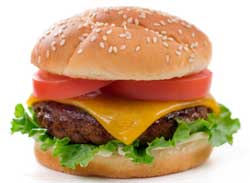 Mon., June 30 -
Awesome Burgers -
6:30 - 9:00pm at Settlers' Walk -
Instructor: David
Sauer. Nothing beats a great burger! This class
takes it way beyond the ordinary. Fire up your grill -- you'll
hunger for these often! Stuffed Burgers, Greek Burgers,
Portabella Burgers, Chipotle Burgers -- and more! $35. Mon., June 30 -
Awesome Burgers -
6:30 - 9:00pm at Settlers' Walk -
Instructor: David
Sauer. Nothing beats a great burger! This class
takes it way beyond the ordinary. Fire up your grill -- you'll
hunger for these often! Stuffed Burgers, Greek Burgers,
Portabella Burgers, Chipotle Burgers -- and more! $35.
CALL TO REGISTER FOR
CLASSES
For Harper's Point classes - call
513-489-6400
For Settlers'
Walk classes - call 937-748-4540
10%
Discount on merchandise purchases
on the day you attend
class! (excluding kitchen
electrics)
Click here to access
class details and full
schedule.
|
July Cooking
Classes
|
July is already
upon us! We're celebrating summer with some fantastic evenings
for adults and some fun times for the kids. Peruse the list,
call a friend(s), and plan a fun summer evening! We'll clean
up the mess!
Tue., Jul 1 -
Stone Creek Dining
Co - 6:30 - 9:00pm at Harper's
Point - Instructor:
Steve Waddell. Chef Steve returns to his native Ohio
with a bit of Savannah in him! Join us as he delights us with
a Southern-inspired, 4-course menu that is sophisticated in flavor
yet in sync with the season. $43.
Tue., Jul 8 - Bravo! Italian Kitchen -
6:30 - 9:00pm at Settlers'
Walk - Instructors:
Curtis Sizemore/Ben Draughn. The bounty of the Italian
table is on display with these BRAVO dishes that are as satisfying
as they are delicious. Check out the menu. $43. SPECIAL: Bring a friend for
1/2 price. Second reservation made at the same time saves
50%! Already registered? Add a friend for only 1/2
price! Limited to availability. (Also offered Tue., Jul
15th).
Tue.,
Jul 8 - 11 - Picnic
Kid's Camp (Ages 6 -
9) - 11:00am - 1:00pm - at Harper's
Point
-
Instructors: Ruth Cammerer and Ann Nofziger. Kids
learn basic cooking skills and nutritional information while having
a great time! (See above description for more details).
$120/series.
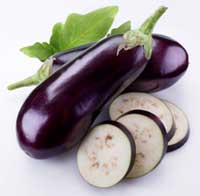 Wed., Jul 9 - Vegetables to Love - 6:30
- 9:00pm at Harper's
Point - Instructors:
Christopher Weist. With the plentiful supply of
summer's fresh vegetables at hand, Chris is on a mission to raise a
crop of families and kids who love to eat vegetables!
$37. Wed., Jul 9 - Vegetables to Love - 6:30
- 9:00pm at Harper's
Point - Instructors:
Christopher Weist. With the plentiful supply of
summer's fresh vegetables at hand, Chris is on a mission to raise a
crop of families and kids who love to eat vegetables!
$37.
Wed., Jul 9 - Grand Sushi Party - 6:30 -
9:00pm at Settlers'
Walk - Instructor:
Lorraine Gose. Have you wanted to try your hand at
making sushi, but didn't know where to begin? Chef Lorraine
will teach you the techniques and methods for creating flawless
sushi, so you'll be making it at home in no time! So roll up
your sleeves as you assemble an array of the most popular sushi,
then savor the succulent flavors. $45.
Mon., Jul 14 - Summer Seafood Southern
Style - 6:30 - 9:00pm at Harper's
Point - Instructor:
Jackson Rouse. Chef Jackson will show you some updated
Southern classics with style and flair; just perfect for those
alfresco dinner parties and picnics. Also pick up a couple of
pointers on canning and preserving those great bounties of summer.
$47. Tue., Jul 15 - Bravo! Italian Kitchen -
6:30 - 9:00pm at Settlers'
Walk - Instructor:
Curtis Sizemore/Ben Draughn. The bounty of the Italian
table is on display with these BRAVO dishes that are as satisfying
as they are delicious. Check out the menu. $43. SPECIAL: Bring a friend for
1/2 price. Second reservation made at the same time saves
50%! Already registered? Add a friend for only 1/2
price! Limited to availability. (Also offered
Tue., Jul 8th).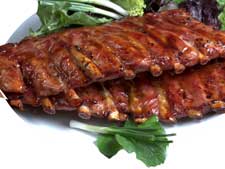 Thu., Jul 17 - "Hog Heaven" BBQ - 6:30 -
9:00pm at Harper's
Point - Instructor:
John Augustin. Thu., Jul 17 - "Hog Heaven" BBQ - 6:30 -
9:00pm at Harper's
Point - Instructor:
John Augustin. Be prepared to taste and learn how to
make championship caliber ribs, pulled pork, chicken, salmon, beef
brisket, John's famous baked beans, and more. Weather
permitting, we'll be grillside at Hog Heaven's competition cooker
where you'll meet the team's heart and soul, Bubba. Learn how
a grill/smoker works, all about competitive grilling, and gain some
equipment tips. $65. SOLD OUT! August 21st class
just added. Last chance this season for this sensational
class!Thu., Jul 17 - 'Tween
Hands-on Summer in Italy
(Ages 11 - 14) - 12:00 2:00pm at Settlers'
Walk - Instructor:
Lorraine Gose. Turn your young one into an Italian chef
while learning basic cooking techniques! (See full description
above). $30. Mon., Jul
21 - Blueberry Bash
- 6:30 - 9:00pm at Harper's
Point - Instructors:
The Genettis. Greg and Summer share the stage and their
secrets for epicurean excellence with this menu, bursting with the
sweetness of blueberries. $45.
CALL TO REGISTER FOR
CLASSES
For Harper's Point classes - call
513-489-6400
For Settlers'
Walk classes - call 937-748-4540
10%
Discount on merchandise purchases
on the day you attend
class! (excluding kitchen
electrics)
Click here to access
class details and full
schedule. Mon., Jul 21 - Fresh Grilled from the Sea
- 6:30 - 9:00pm at Settlers'
Walk - Instructor:
David Sauer. This evening will feature fish and seafood
cooked quickly and easily for appetizers, main dishes, salads, and
more. Take these recipes outdoors to your grill, or use a good
stove-top grill pan in your kitchen. Enjoy fresh fish this
summer! $45. Wed., Jul 23 -
Refreshing Desserts
- 6:30 - 9:00pm at Harper's
Point - Instructor:
Nancy Pigg. Delicious desserts and cool treats that say
sum-sum-summertime! Imagine this: Frozen Lemon Mousse
Pie, Avocado Raspberry Mousse, Orange Creamsicle Sherbet with Orange
Stars, and Blackberry Cake with Whipped Cream. $37. SPECIAL: Bring a friend for
1/2 price. Second reservation made at the same time saves
50%! Already registered? Add a friend for only 1/2
price! Limited to
availability. Thu., Jul 24 - Cool, Calm, Delicious -
6:30 - 9:00pm at Harper's
Point - Instructor:
Marilyn Harris. Let Marilyn introduce you to fresh
inspirations for palate pleasing dinners. Excellent choices
for hot summers and healthy appetites, they can be made ahead and
chilled for an easy, cool, summer meal. $65. 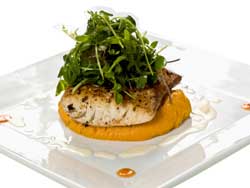 Thu.,
Jul 24 - Sauce'sational! - 6:30 -
9:00pm at Settlers'
Walk - Instructor:
Gabe Gardner. Thu.,
Jul 24 - Sauce'sational! - 6:30 -
9:00pm at Settlers'
Walk - Instructor:
Gabe Gardner. Dress up your meals every day with these fast
and easy-to-prepare sauces. Gabe's great sauces will make any
meal even more special! $45. Mon., Jul 28 - Summer Fare with Rue Dumaine - 6:30 - 9:00pm
at Settlers'
Walk - Instructor:
Anne Kearney. A nationally acclaimed chef, Anne loves
to share her love of food with others. In keeping with her
reputation for outstanding food using the finest local and seasonal
ingredients available, she will inspire you with these recipes that
combine fresh flavors, texture, fragrance and color.
Experience Anne's passion as she shares a bit of her food knowledge.
$50. Tue., Jul 29 - 31 -
'Tween
Boot Camp, Ages
10-14 - 11:00am - 1:00pm at Harper's
Point - Instructor:
Kate Cole. This Boot Camp offers an introduction to
recipe reading, measuring, kitchen safety, food safety, equipment
usage, portion control, proper mixing methods, ingredient
identification, and various culinary preparations. (See details
above under "Kid's Classes). $95/series. Tue., Jul 29 - Daveed's Asian
Twist - 6:30 - 9:00pm
at Harper's
Point - Instructors:
David & Liz Cook. 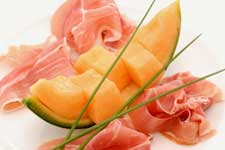 Known for their innovative culinary
talents and leadership, David and Liz will show you how to add some
metropolitan and global influnces to your summer dining! Check
out the menu at our website. $45. Thu., Jul 31 - Summer Fresh Flavor - 6:30
- 9:00pm at Settlers'
Walk - Instructor:
Romayne Baxter-Theodor. This delightful medley of
recipes incorporates fresh from the farm flavors into a lovely
seasonal menu. A well-balanced, multi-course meal, it's a sure
winner for family, yet appropriate for guests. $37.
CALL TO REGISTER FOR
CLASSES
For Harper's Point classes - call
513-489-6400
For Settlers'
Walk classes - call 937-748-4540
10%
Discount on merchandise purchases
on the day you attend
class! (excluding kitchen
electrics)
|
| Frozen
Perfections |
Among the frozen perfections we
enjoy, ice cream is often the first
choice. 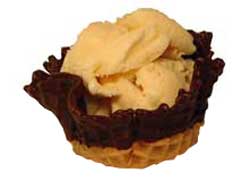 But, there are many cousins of our frozen
favorite that are equally enjoyable. If you've ever wondered about the
differences, here are some highlights and key terms: But, there are many cousins of our frozen
favorite that are equally enjoyable. If you've ever wondered about the
differences, here are some highlights and key terms:
Ice Cream - Ice cream is made with milk, cream,
sugar, sometimes eggs, and various flavorings. To
be called ice cream, it must have at least 10% butterfat, and have
no more than 50% air content. This air content,
known in the biz as "overrun," is a key
differentiating ingredient and not listed on the label!
Premium ice creams have a higher butterfat content, up to
18%, and much, much less air.
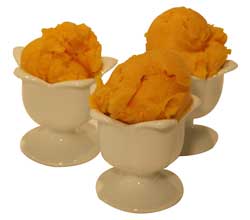 Sherbet - The familiar, pastel sherbets are made
with milk, sugar, and occasionally eggs, but use sweet fruit juice
or puree as a substitute for the cream. Sherbets
have a low butterfat content between 1-2%, and often a greater
amount of sugar to keep it from freezing too
solidly. Sherbet - The familiar, pastel sherbets are made
with milk, sugar, and occasionally eggs, but use sweet fruit juice
or puree as a substitute for the cream. Sherbets
have a low butterfat content between 1-2%, and often a greater
amount of sugar to keep it from freezing too
solidly.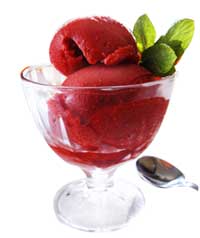
Sorbet - Sorbets are fruit-based without any
cream, milk, or eggs. The fruit, or fruit
essence, is combined with sugar, water, and often lemon
juice. The tangy result is totally
refreshing! In fact, sorbets are often used as a
palate cleanser between courses. Nutritionally,
sorbets offer a no-fat, lower calorie alternative to ice
cream. Use fresh fruit; canned or cooked fruit
will not have the same impact.
Sorbetto - Like a sorbet, sorbetto is made from
fresh fruit, sugar, lemon juice and water.
Originating as a southern Italian sorbet, this version
features more fresh fruit and less water. The
resulting dense flavor 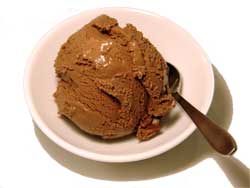 features a softer, less "icy"
consistency. features a softer, less "icy"
consistency.
Gelato - This northern Italian version of ice
cream shares the same ingredient list as ice cream, but in different
proportions. Gelato uses more milk and eggs, but
less cream, (5 - 8%), than ice cream, (10-18%).
Gelato flavorings are intense, as though the essence or a
reduction of the flavoring has been used. The
gelato texture is dense; the method for freezing gelato minimizes
the amount of air incorporated in the final product.
Churning injects some air in the gelato, but no extra air is
added as is the case with most ice creams. By
definition, gelato may be no more than 35% air.
Gelato's density and lower butterfat content requires a
slightly higher storing temperature than ice
cream.
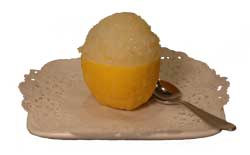 Granita - With ingredients similar to a sorbet,
granitas differ in the way they turn from liquid to frozen, a
process known as "still freezing." The fruit
mixture is poured in a shallow pan and left to chill in the
freezer. Every 20 minutes the mixture is stirred
with a fork. The result is a slushy mixture with
flaky, ice crystals. Granita - With ingredients similar to a sorbet,
granitas differ in the way they turn from liquid to frozen, a
process known as "still freezing." The fruit
mixture is poured in a shallow pan and left to chill in the
freezer. Every 20 minutes the mixture is stirred
with a fork. The result is a slushy mixture with
flaky, ice crystals.
Frozen Yogurt - The frozen version of this cultured dairy
product is another lower fat alternative to ice cream.
Sweetened yogurt takes the place of the dairy fat in creating
an appropriate texture that's not too firm.
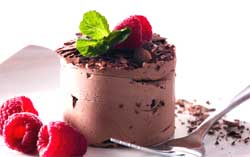
Semifreddos - Translated from
its Italian origins, semifreddo means
"half-cold." The
ingredients are similar to ice cream, but air is incorporated
through the inclusion of whipped eggs, meringue, or whipped
cream. The mixture is "still frozen" in a mold without being
disturbed. The resulting texture is similar to a frozen
mousse.
|
The Science of Ice
Cream
|
|
Regardless of
your frozen preference, the process and science of making your own
list of favorites is quite similar. The target is
a great taste and a perfect texture. The ice
cream should be sweet and flavorful; the texture should be smooth,
semi-firm, and melt in the mouth without any waxy feel.
To accomplish this, the ingredients must be fresh, first
quality, and in the right proportions. The
freezing process must produce a consistent, fine, icy crystal.
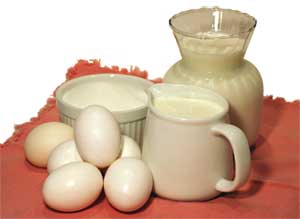 The Ingredient Mix - In its simplest form, ice cream is made
from milk, sugar, cream, and
flavorings. A good ice cream needs
some of each of these ingredients to freeze well and taste
good. The milk provides proteins essential for
creating a structure that captures air bubbles and separates fat
globules. The sugar provides sweetness and a
lower freezing temperature that keeps the ice cream from freezing
rock hard. The cream supplies the characteristic
richness. Butterfat, the type of fat found in
cream and all dairy products, is a complex fat whose components melt
at different temperatures producing a cascading effect as it passes
through the mouth. If the ice cream contains
eggs, it is known as a French custard-style; without
eggs it is termed Philadelphia-style.
With the sweet cream mixtures as a canvas, imaginative
flavorings provide the unique tastes we've come to love. The Ingredient Mix - In its simplest form, ice cream is made
from milk, sugar, cream, and
flavorings. A good ice cream needs
some of each of these ingredients to freeze well and taste
good. The milk provides proteins essential for
creating a structure that captures air bubbles and separates fat
globules. The sugar provides sweetness and a
lower freezing temperature that keeps the ice cream from freezing
rock hard. The cream supplies the characteristic
richness. Butterfat, the type of fat found in
cream and all dairy products, is a complex fat whose components melt
at different temperatures producing a cascading effect as it passes
through the mouth. If the ice cream contains
eggs, it is known as a French custard-style; without
eggs it is termed Philadelphia-style.
With the sweet cream mixtures as a canvas, imaginative
flavorings provide the unique tastes we've come to love.
The Freezing Process - After the ingredients are mixed, the
freezing process will determine the final result.
A cold mixture that has been refrigerated for at least two
hours will facilitate freezing. Regardless of the
machine used for freezing the ice cream, cold temperatures are
transferred indirectly to the mixture through some type of metal
container. (See types of ice cream machines
below). Continuous movement of the mixture while
in contact with the freezing metal is pivotal to the
process. 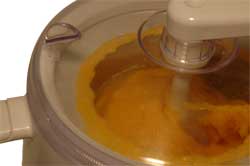 Known
as churning, or spinning, a paddle or
dasher stands in the center of the mixture and connects to a
crank. Turning the crank moves the dasher's blade
along the insides of the metal container forcing newly formed ice
crystals back into the mixture. The ice cream's
temperature is lowered evenly and efficiently while allowing only
the smallest of ice crystals to form. Within
20-30 minutes, the mixture grows more difficult to crank as it
freezes and solidifies. The ice cream may be
enjoyed at this point with its soft texture, or the container may be
placed in the freezer for a few hours to harden or
ripen to a firmer texture. Known
as churning, or spinning, a paddle or
dasher stands in the center of the mixture and connects to a
crank. Turning the crank moves the dasher's blade
along the insides of the metal container forcing newly formed ice
crystals back into the mixture. The ice cream's
temperature is lowered evenly and efficiently while allowing only
the smallest of ice crystals to form. Within
20-30 minutes, the mixture grows more difficult to crank as it
freezes and solidifies. The ice cream may be
enjoyed at this point with its soft texture, or the container may be
placed in the freezer for a few hours to harden or
ripen to a firmer texture.
The Other Stuff - The ingredients list on commercial ice
creams sport words like monoglyceride glycerol monosterate, guar
gum, carageenan, methylcellulose, xanthan gum, etc.,etc.
These additions are food chemists' attempt to imitate a
natural texture and mimic the butterfat feel in our
mouths. "Economy ice creams" can be up to half
air and as little as 10% butterfat. This strategy
forces the use of stabilizers and emulsifiers to create a desirable
product. With homemade ice cream, we get to skip
all these
additives. |
Making and
Serving Ice Cream
|
|
Making homemade
ice cream is easier and less expensive than you might think, and
today's machine options facilitate a nearly foolproof
result:
Ice Cream Makers - There are three basic types of freezing
mechanisms: (1) ice and salt, (2) pre-frozen
inserts, and (3) compressor units.
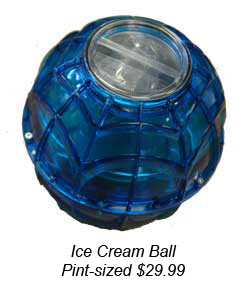 Ice and Salt - This method may be the most familiar to
the old pros among us. A specialized bucket is
outfitted with an internal, metal, cylindrical container designed to
seal the ice cream mixture and set in the center of the
bucket. The cylinder is surrounded by alternating
layers of ice and rock salt. The salt melts the
ice to an efficient liquid that has a temperature below the freezing
point. A hand or electric-powered crank fits on
top of the cylinder and bucket, and turns the internal
paddle. The coldness of the ice slurry transfers
through the metal container to freeze the ice cream mixture. Ice and Salt - This method may be the most familiar to
the old pros among us. A specialized bucket is
outfitted with an internal, metal, cylindrical container designed to
seal the ice cream mixture and set in the center of the
bucket. The cylinder is surrounded by alternating
layers of ice and rock salt. The salt melts the
ice to an efficient liquid that has a temperature below the freezing
point. A hand or electric-powered crank fits on
top of the cylinder and bucket, and turns the internal
paddle. The coldness of the ice slurry transfers
through the metal container to freeze the ice cream mixture.
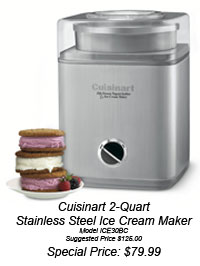
Prefrozen Inserts - Several designs of ice cream makers
utilize a pre-frozen insert. These reusable
inserts are sealed, double-walled, metal containers with liquid
inside. The insert is frozen ahead of time, then
assembled with a hand or electrical cranking system.
The cold transfers from the frozen liner similarly to the
old-fashioned ice and salt method. One insert
will make one batch of ice cream, then will need to be
refrozen. Many fans choose to have an extra
insert available, and at least one in the freezer at all times.
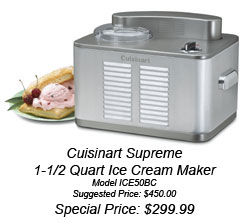
Compressor Units - Serious ice cream aficionados may wish to
consider free-standing freezing units. These
machines generate the cold, freezing temperatures with a
compressor-based system similar to a refrigerator's freezing
system. The machine has a container for the ice
cream mixture, an internal paddle, and a continuous freezing
element. Batch after batch of ice cream may be
made without any refreezing of an insert, or replacement of ice and
salt.
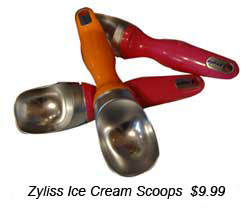
Scoops, Spades, and Spoons - Whatever your frozen pleasure, dishing it
up has bent more than one spoon at some point in time.
Great scoops and spades in all colors and shapes are
available to easily handle the task. Personalize
your choice by finding a scoop that fits your hand, leverages your
arm muscles, and thermally resists sticking to the ice
cream. Show off your talents by serving up your
homemade delight in new ice cream
dishes! |
Smart Ice
Cream Tips
|
 Tip #1: Add fresh fruit to
your favorite ice cream base by pureeing sweet, ripe fruit, and
adding it to a cooled milk mixture. If you like
chunks of fruit in your ice cream, you can avoid rock-hard pieces by
macerating the fruit; sprinkle one or two tablespoons of sugar over
the diced fruit and let set for a few minutes until juice appears.
The sugar withdraws some of the water from the fruit, and the fruit
absorbs some of the sugar. With this method, the
fruit chunks will remain softer in the final product. Tip #1: Add fresh fruit to
your favorite ice cream base by pureeing sweet, ripe fruit, and
adding it to a cooled milk mixture. If you like
chunks of fruit in your ice cream, you can avoid rock-hard pieces by
macerating the fruit; sprinkle one or two tablespoons of sugar over
the diced fruit and let set for a few minutes until juice appears.
The sugar withdraws some of the water from the fruit, and the fruit
absorbs some of the sugar. With this method, the
fruit chunks will remain softer in the final product.
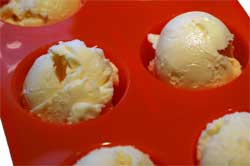
 Tip #2: Save
time when scooping ice cream for a la mode
presentations. Dish single portions into a muffin
pan and cover with a freezer-grade plastic wrap.
The ice cream stays cold and is quickly dished at serving
time. A silicone muffin pan allows the ice cream
scoops to "pop out" with ease. Tip #2: Save
time when scooping ice cream for a la mode
presentations. Dish single portions into a muffin
pan and cover with a freezer-grade plastic wrap.
The ice cream stays cold and is quickly dished at serving
time. A silicone muffin pan allows the ice cream
scoops to "pop out" with ease.
Tip #
3: Use
rock salt when making ice cream with ice cubes.
Rock salt dissolves more slowly, and the larger granules
stick to the ice surfaces instead of slipping to the bottom as a
fine grain salt would
do. |
Q & A
|
|

Q:
When and
how did the ice cream cone come to
be?
A:
Legend has it that the ice cream cone was
an invention of convenience at the 1904 St. Louis World's
Fair. The ice cream vendor ran out of ice cream
dishes when a nearby waffle vendor came to the rescue with a waffle
rolled into a cone shape. Flat-bottomed cake
cones were designed and manufactured in the 1940's for the Dairy
Queen chain. 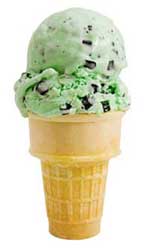
Q: My ice cream has a lot of ice crystals on
the surface and an off taste. What's
wrong?
A: Ice
cream's freshness depends on good storage techniques throughout
production, shipping, and while at home. Ice
crystals form on the top surface when the ice cream has been exposed
to warmer temperatures, and then has been refrozen.
The slightly melted surface separates into water, milk fat
and solids. This situation occurs more quickly
for ice creams without stabilizers. Ice cream
easily picks up freezer odors. If the storage
container no longer provides a tight seal, top the ice cream with
freezer-grade plastic wrap to decrease odor absorption.
Q:
Is there
gelatin in gelato?
A:
No. Despite the
seemingly common word form, the word "gelato" derives from the
Italian word for "frozen." However, gelatin is
sometimes found in lesser ice creams as a texture
enhancer. The gelatin absorbs extra water and
prevents the formation of large ice crystals.
Most gelatins used in ice cream-making are plant-based rather
than traditional animal-based gelatins.
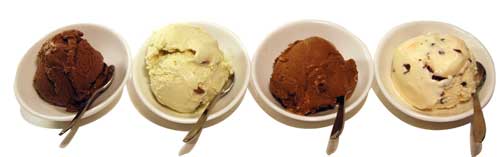
Q: Can I freeze a container of yogurt and
make frozen yogurt?
A: Not exactly.
A typical yogurt contains too much water and not enough
sugar; the result would be rock hard. You can
make frozen yogurt with a combination of plain, whole milk yogurt
that has been drained for several hours to remove excess
water. (If you live near a Middle Eastern market,
lebane is this thick, drained yogurt). Add
sugar, any desired flavors, and freeze.
Q: What causes an ice cream
headache?
A:
An
ice cream headache occurs when intense coldness contacts the roof of
your mouth. That area has nerve endings that
signal the brain that it needs to warm up. Blood
vessels in the area dilate immediately in response to the
situation. The dilation creates pressure, or the
headache. Slowing down and taking smaller bites
will prevent an ice cream
headache. |
Cookbook
Review
|
|
A Passion for Ice Cream, 95 Recipes for
Fabulous Desserts
by Emily Luchetti. Photographs by Sheri
Giblin. Copyright 2006.
Published by Chronicle Books, San Francisco.
Deservedly,
A Passion for Ice Cream has been awarded the
coveted International Association of Culinary Professionals 2007
Award for Best Cookbook on a Single Subject. This
book will inspire all but the immovable to greater ice cream
heights. The cover photo is an irresistible
invitation to pick up and open this book, and once inside you'll
succumb to the wonderful creations, unique ideas, and novel
presentations. 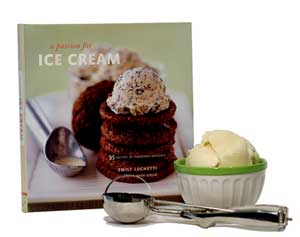 Seriously, Ms.
Luchetti provides a great instructional manual about all things ice
cream, sorbet, sherbet and granita. She helps us
apply this knowledge with her offering of over 95 fabulous desserts.
Each frozen treat would be enough on its own, but
their inclusion as "a principal" in these creative presentations
supersedes the notion of "just ice cream for dessert."
Most of the recipes are lavishly illustrated with luscious,
artistic photographs that make you wish for the spoils of the photo
shoot. In our opinion, the combination of text
and photography qualify this cookbook as a "coffee table book" as
well as an indispensable kitchen
resource. Seriously, Ms.
Luchetti provides a great instructional manual about all things ice
cream, sorbet, sherbet and granita. She helps us
apply this knowledge with her offering of over 95 fabulous desserts.
Each frozen treat would be enough on its own, but
their inclusion as "a principal" in these creative presentations
supersedes the notion of "just ice cream for dessert."
Most of the recipes are lavishly illustrated with luscious,
artistic photographs that make you wish for the spoils of the photo
shoot. In our opinion, the combination of text
and photography qualify this cookbook as a "coffee table book" as
well as an indispensable kitchen
resource.
|
Ice Cream, Sorbets, and Granita
Recipes
|
|
This trio of
recipes will expose you to the making of homemade ice cream,
sherbet, sorbet, and a granita. Each concoction is perfect on
its own, and certainly impressive in the suggested combination and
presentation.
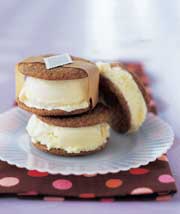
Gingersnap
Lemon Ice Cream Sandwiches
This recipe features a
French-style, custard-based ice cream. The addition of eggs
and the extra steps of heating the mixture prior to freezing make
for a rich, rich ice cream. The lemon zest and lemon juice,
tempered with sweetness, bring a refreshing flavor that pairs
perfectly with the gingersnap wafers. The ice cream is perfect
on its own, or as the filling for these elegant ice cream
sandwiches. (Photograph courtesy of Chronicle
Books).
Click here to view the full
recipe.
Click here for a printable version
of the recipe.
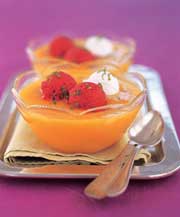 Mango Soup
with Coconut Sherbet and Strawberry Sorbet Mango Soup
with Coconut Sherbet and Strawberry Sorbet
As colorful
as it is flavorful, this recipe is a visual and gustatory
delight! The coconut sherbet is made with both coconut milk
and coconut cream churned to a smooth, bright white, frozen
treat. The fresh strawberry and lemon base makes a tangy
strawberry sorbet. Set scoops of both the coconut sherbet and
strawberry sorbet in the mango puree. The mango sauce matches
and ideally complements the other flavors. The mango mix can
easily be frozen and transformed into a mango sorbet. (Photograph courtesy of Chronicle Books).
Click here to view the full
recipe.
Click here for a printable version
of the recipe.
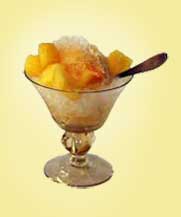 Iced
Bellinis Iced
Bellinis
The icy character of a granita is
particularly refreshing on hot summer days. This granita
features a sparkling wine, and creates a perfect crystal-like
topping for the peach sorbet. This presentation seems destined
for serving in a stemmed glass. The peach sorbet is wonderful
on its own, too! Totally
refreshing!
Click here to view the full
recipe.
Click here for a printable version
of the recipe.
| |