Fall 2009
Cooking Classes Registration
|
FALL
2009 COOKING CLASSES are OPEN for
REGISTRATION
Register Online,
In-Person, or by Telephone
Harper's Point
classes - Call 513-489-6400 Settler's Walk
classes - Call 937-748-4540
www.cookswaresonline.com
To view all of the details, visit our
website now and plan some fun this autumn! Limited seating --
Plan early, then Register! 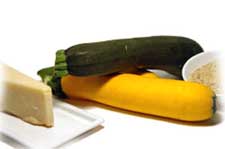
Harper's
Point from 6:30 - 9:00pm $40
Weds, August 19 -
Tastes of the French Market with Marilyn Harris
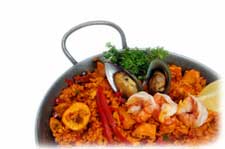
Harper's Point from
6:30 - 9:00pm $60
Tues, September 1 -
Paella Party with
Hector Esteve
 Settlers' Walk from 6:30 - 9:00pm $45 Settlers' Walk from 6:30 - 9:00pm $45
Wed, September 2 -
More Sushi Secrets with Jeff Simmons
Harper's Point from 6:30 - 9:00pm $50 -
Hands
On!
Thurs, September 3 -
Bravo's Great Italian Food with Curtis Sizemore or Ben
Draughn
Settlers' Walk from
6:30 - 9:00pm $40
Harper's Point
classes - Call 513-489-6400
Your Cooks'Wares Bonus:
Cooks'Wares offers a 10% Discount
on your merchandise purchases
on the
day you attend class! (excluding kitchen
electrics) |
Heating It
Up!
|
|
|
|

|
|
Pepper
pods are the fruit, (actually, botanically-speaking a
"berry"), of Capsicum plants. Purple, green, red,
orange, and yellow, their bright colors are eye candy in the
vegetable world. Native and central to the Americas, chile
pepper plants circumnavigated the globe in the 1500's becoming
a staple in cuisines throughout Africa and Asia. Myth has it,
that Christopher Columbus assigned "pepper" to the chile pods
likening its heat to black pepper even though the two are not
at all related.
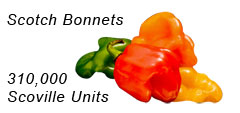
Measuring the
Heat - Chile peppers are synonymous with culinary
"heat." Understanding the "heat factor" of chile peppers will
provide you confidence in your explorations and allow you to
claim dynamite raves at the table. Capsaicin, one of several
heat-producing capsaicinoids in chiles, is the substance most
responsible for the spicy feel in our mouths.
Chile
pepper heat is commonly measured in two ways:
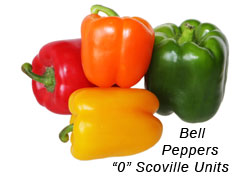
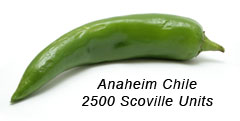
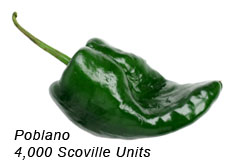
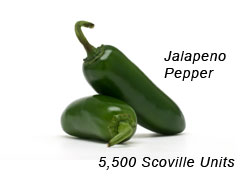
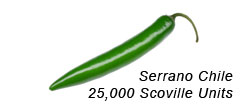
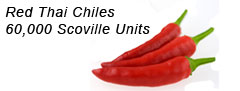
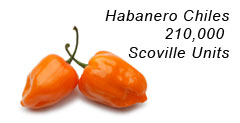
Scoville Heat
Units (SHU) - Devised by William
Scoville in 1912, the Scoville Organoleptic test is a method
of measuring chile pepper heat by diluting pepper extract in
water to the point that it is not discernable to the taste.
The higher the number, the greater the dilution, the hotter
the pepper. By definition, this method is subjective based on
the taster's palate, but it is directionally accurate when
comparing the different varieties.
High-Performance
Liquid Chromatography (HPLC) - This method is the
high-tech, laboratory technique for measuring the chemicals
responsible for the chile's heat. The capsaicinoids are
extracted from chile pods and processed through the
chromatographer. The chemical analysis accurately measures the
chile's collective power and the quantities of individual
heat-producing chemicals.
Variations in
Temperature - Beyond the genetics of a chile, the
environmental conditions in which the chile grows can greatly
impact an individual chile's warmth. This helps to explain
those situations where the same recipe may be just right one
time, and over the top with fire the next time. Birds appear
not to be sensitive to capsaicin and happily eat chile peppers
spreading their seeds efficiently. Men perceive chiles hotter
than women - something about testosterone . . . .
Advantages of
Heat - Consumed chiles connect with pain receptors in
our mouth producing a cascade of chemical reactions in our
bodies. The pain receptors send signals to our brain
triggering an increased heart rate, more perspiration, and a
discharge of pain-relieving endomorphins. The perspiration
produces an evaporative cooling effect and the endomorphins
provide a natural feel-good. Besides their heat-related
qualities, chile peppers are nutritional goldmines - one chile
pod has the Vitamin C equivalent to six
oranges! | |
Preparing
Peppers
|
Peppers are
easily wrangled in the kitchen with a little practice. These quick
tips on technique will shortcut your learning curve and your prep
time!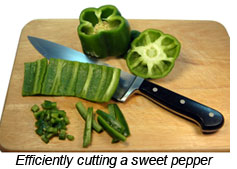
Cutting Bell Peppers - Achieving a
dice or julienne of bell peppers happens quickly by trimming the top
stem end and the nubby bottom. Cut the pepper shell cylinder open,
trimming any seeds and membrane away. Some of us like to wash the
pepper at this stage finding it easy to remove any outside dirt and
loose seeds all at once instead of in two washings. Spread the
pepper flat. Using your best cutting form, cut strips from the
pepper "sheet." To dice, turn the strips perpendicularly and slice
away!
Scraping out
Seeds - The membranes and seeds in chile peppers hold
concentrated heat. Most preparations of fresh chile peppers require
removal of these "innards." Depending on the pepper, a knife may do
the job very well. For other peppers, especially small ones, try
using a melon baller, a grapefruit spoon, or even a demitasse spoon.
The curved shapes match the pepper's form nicely.
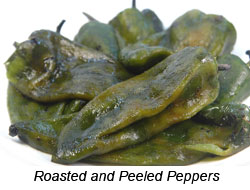
 Roasting Peppers - The outer skin
of a chile pepper can be tough and undesirable. It's such a thin
layer that peeling a pepper as you would an apple is impossible. The
time-honored method of removing this outer membrane is through
roasting the pepper. Roast a pepper by applying high heat to the
outer surface. The heat blisters the skin making it easy to remove.
In the process, the skin may become quite blackened; inside the
pepper's flesh remains firm and succulent. Roasting Peppers - The outer skin
of a chile pepper can be tough and undesirable. It's such a thin
layer that peeling a pepper as you would an apple is impossible. The
time-honored method of removing this outer membrane is through
roasting the pepper. Roast a pepper by applying high heat to the
outer surface. The heat blisters the skin making it easy to remove.
In the process, the skin may become quite blackened; inside the
pepper's flesh remains firm and succulent.
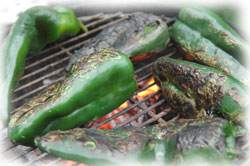
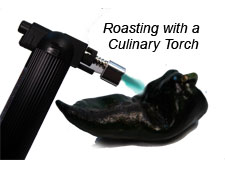
Fire Roasting -
This most common method can be accomplished on the grill, over a gas
stovetop burner, or with a culinary torch. Place the fresh peppers
directly over the fire 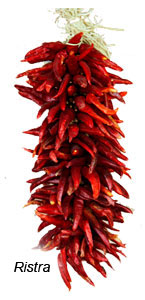 turning
them frequently to allow all sides to be reached by the flames. Over
a strong flame, Jalapeño peppers will take 3-4 minutes, the larger
Anaheim or Poblano peppers will take 5-6 minutes. Watch and tend the
peppers closely. turning
them frequently to allow all sides to be reached by the flames. Over
a strong flame, Jalapeño peppers will take 3-4 minutes, the larger
Anaheim or Poblano peppers will take 5-6 minutes. Watch and tend the
peppers closely.
Heat Roasting -
This method can be accomplished in the oven (400-450° F), or with a
grid pan on top of an electric burner. Turn the peppers frequently
during the heating.
When the skin has blistered
uniformly, remove from heat and place in a brown paper bag or closed
container for a few minutes. Steam will collect and serve to further
loosen the chile's skin. After this step, the outer skin can be
removed quickly by gently pulling the skin away from the
pepper.
Drying
Peppers - A familiar site and fragrance this time of year in
the Southwest are the ristras -
chiles strung together hanging in the sun to dry. These classic
forms are made from red, ripe chiles. To learn how to make your own
ristras,
consult this "How-To" page from New Mexico State
University.
|
Cooks'Wares' Chile Pepper
Tips
|
 Tip
#1: When roasting peppers, make the most of your
effort by doing a few extra and freezing them in a single layer. You
may peel before or after freezing. Tip
#1: When roasting peppers, make the most of your
effort by doing a few extra and freezing them in a single layer. You
may peel before or after freezing.
Tip #2: Chipotles in adobo
sauce are red, ripe jalapeño chiles that have been dried, smoked and
canned in a vinegary tomato sauce. We find that one small can
provides enough chile power for several recipes. Once the can is
open, chop the entire contents and freeze the unused portion in
handy tablespoon quantities for future use.
Tip #3: Confused by the chile
terminology? Fresh chiles have one name, dried they have another.
Here's a translation of some of the more commonly used chile terms:
Poblano
(fresh) = Ancho (dried),
Jalapeño
(fresh) =
Chipotle (smoked-dried red), Mirasol (fresh)
=
Guajillo (dried), Green Chile
(fresh) = Pasado
(dried).
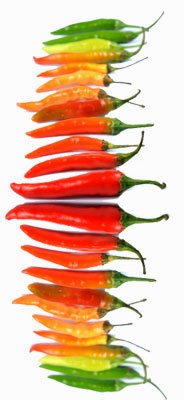
 Tip #4: Generally, the smaller the
pepper, the hotter. Peppers become hotter as they ripen with red
peppers two to three times hotter than their green precursors.
Hotness concentrates even further when dried. The hottest pepper on
record according to the Guinness Book of World Records is the Bhut Jolokia with its Scoville
score of 1,001,304! Tip #4: Generally, the smaller the
pepper, the hotter. Peppers become hotter as they ripen with red
peppers two to three times hotter than their green precursors.
Hotness concentrates even further when dried. The hottest pepper on
record according to the Guinness Book of World Records is the Bhut Jolokia with its Scoville
score of 1,001,304!
Tip
#5: Chiles roasted directly over a flame will wilt the flesh
slightly. Chiles roasted in the oven will yield slightly firmer
flesh, and chiles torched with a culinary torch will result in the
firmest (least cooked)
flesh.
|
Q &
A's
|
 Q:
What's the best way to protect your skin when preparing
peppers? Q:
What's the best way to protect your skin when preparing
peppers?
A:
The capsaicin in chiles can be irritating to your
skin. A coating on your fingers with olive oil may provide a layer
of protection. Wash your hands well with soap after handling chiles.
 Some
report that cleaning up with a wipe down with rubbing alcohol will
dissolve the potent chile oils. Gloves are helpful when working with
chiles. Do not touch your eyes when working with chiles. Some
report that cleaning up with a wipe down with rubbing alcohol will
dissolve the potent chile oils. Gloves are helpful when working with
chiles. Do not touch your eyes when working with chiles.
Q: What's the
best antidote for chile heat?
A: Chile heat comes from
chemicals that are hydrophobic, that is, they do not combine well
with water. That's why drinking water (or beer) will not quell the
heat in your mouth or throat. Instead, try a dairy product, bread,
or rice to tame the flame.
Q: What is Tabasco®
sauce?
A:
Inspired in 1868 by the tabasco pepper plant, the McIlhenny family
made this hot chile into a sauce business located on Avery Island,
Louisiana. Crushed chiles, salt, white wine vinegar and 3 years of
aging in white oak barrels produce one of the most familiar
chile-based hot sauces.
Q: What is the hottest part of a
chile?
A: The
capsaicin is concentrated in the seeds, membrane and stem end of a
chile. Remove the inner seeds and white membranes as part of your
preparation of fresh chiles.
Q: What's the difference between
green and red chiles?
A: One might think the two
common colors are two different species or varieties, however, green
is just the immature form of the pepper. Red indicates a ripe chile.
Both immature and ripe chiles are used extensively each lending a
particular character to a dish.
|
Cooks'Wares Cookbook
Review
|
The Great
Chiles Rellenos Book by Janos Wilder. Copyright 2008.
Published by Ten Speed Press, Berkeley, CA. (This book may be ordered from the
publisher by calling 1-800-733-3000 or by going to www.tenspeed.com).
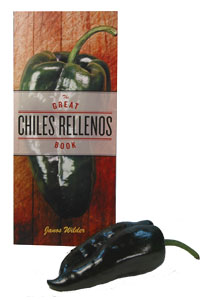 Cookbooks
that take a single food and riff on it are fascinating! With a
singular focus, mastery of the topic seems accessible for the
everyday cook. This is the case with the cookbook, The
Great Chiles Rellenos Book. The term, chile rellenos,
translates to "peppers, stuffed." As the author explains, he began
stuffing Anaheim, Poblano and Jalapeño peppers with traditional
recipes from different regions, and then veered off into the land of
experimentation. The cookbook logically sets a solid foundation with
a helpful discussion of roasting and preparing peppers. The fillings
range, as promised, from traditional cheese to exotic lobster with
triple cream brie, and everything in between. A chapter is also
included for peppers in casseroles, salads, and as "poppers." The
sauces and condiments that will complement the chile rellenos are
graciously included and polish the presentation to a delightful
finish. We appreciated the in-depth lessons on chile rellenos and
feel quite enabled in turning a couple of these recipes into new
personal signature
dishes! Cookbooks
that take a single food and riff on it are fascinating! With a
singular focus, mastery of the topic seems accessible for the
everyday cook. This is the case with the cookbook, The
Great Chiles Rellenos Book. The term, chile rellenos,
translates to "peppers, stuffed." As the author explains, he began
stuffing Anaheim, Poblano and Jalapeño peppers with traditional
recipes from different regions, and then veered off into the land of
experimentation. The cookbook logically sets a solid foundation with
a helpful discussion of roasting and preparing peppers. The fillings
range, as promised, from traditional cheese to exotic lobster with
triple cream brie, and everything in between. A chapter is also
included for peppers in casseroles, salads, and as "poppers." The
sauces and condiments that will complement the chile rellenos are
graciously included and polish the presentation to a delightful
finish. We appreciated the in-depth lessons on chile rellenos and
feel quite enabled in turning a couple of these recipes into new
personal signature
dishes!
|
Recipes featuring Chile
Peppers
|
Reprinted with permission from The Great
Chiles Rellenos Book by Janos Wilder, copyright © 2008.
Interior photo credit: Laurie Smith © 2008; Cover photo credit: Ed
Anderson © 2008. Published by Ten Speed Press, an imprint of the
Crown Publishing Group, a division of Random House, Inc., New
York. The book may be ordered from the publisher by calling
1-800-733-3000 or by going to www.tenspeed.com.
Basic Monterey
Jack Cheese Chiles Rellenos
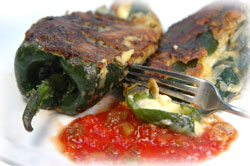 This
introductory recipe is perfect for getting started with chiles
rellenos. The preparation provides experience with roasting peppers,
stuffing, and light breading processes. Sautéed, not deep-fried,
these stuffed peppers were easy and delicious! Topped with a bit of
salsa, two per person made for a perfect supper! This
introductory recipe is perfect for getting started with chiles
rellenos. The preparation provides experience with roasting peppers,
stuffing, and light breading processes. Sautéed, not deep-fried,
these stuffed peppers were easy and delicious! Topped with a bit of
salsa, two per person made for a perfect supper!
Click here to view the illustrated
recipe.
Click here for a printable version of
the recipe.
Culichi and
Shredded Chicken Chiles Rellenos Casserole
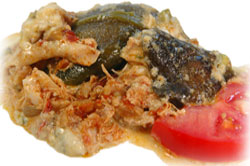 Layered
in lasagna fashion, the roasted peppers provided one layer, the
shredded chicken in a diced onion and tomato sauce provided the next
layer. Monterey Jack cheese came next, and a fantastic Mexican white
sauce, Culichi, finished the dish. The result was an incredibly
delicious casserole that baked into a hearty, delicious
meal. Layered
in lasagna fashion, the roasted peppers provided one layer, the
shredded chicken in a diced onion and tomato sauce provided the next
layer. Monterey Jack cheese came next, and a fantastic Mexican white
sauce, Culichi, finished the dish. The result was an incredibly
delicious casserole that baked into a hearty, delicious
meal.
Click here to view the illustrated
recipe.
Click here for a printable version of
the recipe.
Cheddar,
Sun-Dried Tomato, and Chorizo Poppers in Tortilla
Crust
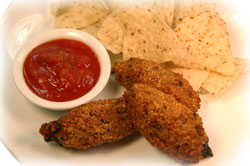 While
jalapeños lose a lot of their heat when heated, there's still just
enough punch to live up to their reputation. These poppers avoid the
over-used cream cheese filling. Instead, the stuffing for these
poppers is a magic mixture of chorizio, sun-dried tomatoes and
cheddar cheese - a great combination for nachos if there's any
leftover stuffing. The ground tortilla chip breading completed the
complementary flavors. This recipe gives "poppers" a whole new
dimension! While
jalapeños lose a lot of their heat when heated, there's still just
enough punch to live up to their reputation. These poppers avoid the
over-used cream cheese filling. Instead, the stuffing for these
poppers is a magic mixture of chorizio, sun-dried tomatoes and
cheddar cheese - a great combination for nachos if there's any
leftover stuffing. The ground tortilla chip breading completed the
complementary flavors. This recipe gives "poppers" a whole new
dimension!
Click here to view the illustrated
recipe.
Click here for a printable version of
the recipe.
| |




 peppers
are comfortable in the kitchen as the main event, or as
the spice that amplifies whatever it graces. As ethnic
cooking traditions go global, chiles are indispensable
in creating authentic flavors. In this issue we talk
about chile peppers and their heat, then offer tips on
the special handling and preparation that peppers
require. Kitchen prep of the season's fresh harvest
demands great knives and knife skills; we'll present a
Knife 101 primer, part one of two. Then, we conclude
with a cookbook devoted to chiles featuring three of its
recipes that will have your mouth watering and your
taste buds
dancing!
peppers
are comfortable in the kitchen as the main event, or as
the spice that amplifies whatever it graces. As ethnic
cooking traditions go global, chiles are indispensable
in creating authentic flavors. In this issue we talk
about chile peppers and their heat, then offer tips on
the special handling and preparation that peppers
require. Kitchen prep of the season's fresh harvest
demands great knives and knife skills; we'll present a
Knife 101 primer, part one of two. Then, we conclude
with a cookbook devoted to chiles featuring three of its
recipes that will have your mouth watering and your
taste buds
dancing!