Artisan Steak
Tastings
|
 Join
Curt
McAdams of Livefire and Carrie Oliver
of the Artisan
Beef Institute for the first ever Artisan Steak Tastings in
Ohio. Be among the first in the area to experience the next
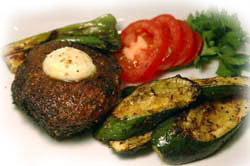
level of beef when you taste steaks from four artisanal ranches and
learn how breed and the rancher affect the flavor of a steak.
The tasting will be alog the lines of a wine tasting, with lots of
great information from Curt and Carrie. Also, learn how to do
an Artisan Steak
Tasting at home with friends! Join
Curt
McAdams of Livefire and Carrie Oliver
of the Artisan
Beef Institute for the first ever Artisan Steak Tastings in
Ohio. Be among the first in the area to experience the next
level of beef when you taste steaks from four artisanal ranches and
learn how breed and the rancher affect the flavor of a steak.
The tasting will be alog the lines of a wine tasting, with lots of
great information from Curt and Carrie. Also, learn how to do
an Artisan Steak
Tasting at home with friends!
Wednesday,
July 29th at 6:30 pm - Settlers Walk
Thursday, July 30th at 6:30 pm -
Harper's Point
|
Summer 2009
Cooking Classes Registration
|
SUMMER
2009 COOKING CLASSES
Register Online, In-Person, or by Telephone
Harper's Point classes - Call
513-489-6400 Settler's Walk classes - Call
937-748-4540
www.cookswaresonline.com
To view all of the details,
visit our website now
and plan some fun this spring!
Limited seating -- Plan
early, then Register!
Thurs, July 23-
World Championship Winning BBQ with George Cook and John Augustin
Harper's
Point from 6:30 - 9:00pm. $65
* * * SOLD OUT! * * *
We
will try to hold a repeat class in August. Call us now if you are
interested, 513-489-6400!
Tues, July 28-
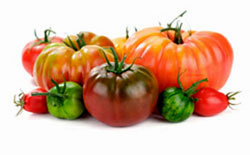
Totally Tomato
with Jim Brooks
 Settlers' Walk
from 6:30 - 9:00pm. $35 Settlers' Walk
from 6:30 - 9:00pm. $35
Thurs, July 30 - Simply Shrimp with
Matt Williams
Settlers' Walk
from 6:30 - 9:00pm $50
Tues,
August 4 - Authentic German Goodness with George Stengl
Settlers' Walk from 6:30 - 9:00pm $45
Thurs, August 6 - Superb Seafood
with Jeff Simmons
Harper's
Point from 6:30 - 9:00pm $50
 Tues, August 11 - Thurs, August 13 -
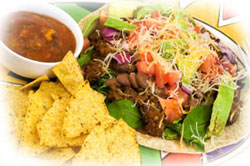
Southwestern Adventures in Cooking Tues, August 11 - Thurs, August 13 -
Southwestern Adventures in Cooking
Tween Cooking
Camp with Kate
Cole
Harper's Point from 11:00
- 1:00pm $95 for 3/day series
Limited to
18 students - Ages 13-15 - Hands On!
Weds, August 12 - Summer Fresh Veggies with Christopher Weist
Settlers' Walk from 6:30 - 9:00pm $45
Tues, August 18 - Tasty Tomatoes & Summer Squash with Dan Berger
Harper's Point from 6:30 - 9:00pm $40
Weds, August 19 - Tastes of the French Market with Marilyn Harris
Harper's Point from 6:30 - 9:00pm
$60
Harper's Point
classes - Call 513-489-6400
Your Cooks'Wares Bonus:
Cooks'Wares offers a 10% Discount
on your merchandise purchases
on the
day you attend class! (excluding kitchen
electrics) |
Essential
Kitchen Herbs
|
Even without a
green thumb, these herbs are accessible to any kitchen gardener or
farmers' market fan. With these nine herbs, the summer harvest of
other fresh, local produce is enhanced and showcased to the palate's
perfection.
 Basil
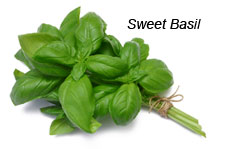
- Perhaps the most utilized summer herb, basil adds its sweet and
strong essence to many summer favorites. The herb is said to have
hints of clove and anise. Keep pinching the tips of this tender
annual plant to encourage branching and discourage flowering. After
flowering, the basil flavor becomes bitter. The most commonly found
basil with its large, floppy leaves is known as lettuce basil.
Experiment with the many varieties available: purple basil,
long-lasting Thai basil, lemon basil, lime basil, and many
others. Basil
- Perhaps the most utilized summer herb, basil adds its sweet and
strong essence to many summer favorites. The herb is said to have
hints of clove and anise. Keep pinching the tips of this tender
annual plant to encourage branching and discourage flowering. After
flowering, the basil flavor becomes bitter. The most commonly found
basil with its large, floppy leaves is known as lettuce basil.
Experiment with the many varieties available: purple basil,
long-lasting Thai basil, lemon basil, lime basil, and many
others.
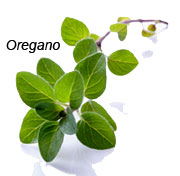 Oregano
- Essential in Greek and Italian cuisines, oregano is a hardy
perennial with small, fragrant leaves. Strong in flavor with a
peppery quality, oregano pairs well with basil, lemon, lamb, pork
and nearly all kinds of vegetables. Throw a few sprigs of oregano,
including their woody stems, on your grill's charcoals for extra
infused flavor. Oregano
- Essential in Greek and Italian cuisines, oregano is a hardy
perennial with small, fragrant leaves. Strong in flavor with a
peppery quality, oregano pairs well with basil, lemon, lamb, pork
and nearly all kinds of vegetables. Throw a few sprigs of oregano,
including their woody stems, on your grill's charcoals for extra
infused flavor.
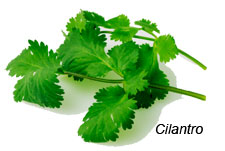 Cilantro
- A frequent ingredient in Mexican and Asian foods, fresh cilantro
is sometimes called Chinese parsley. The seeds of the cilantro plant
become the spice, coriander. Cilantro, pungent and spicy, is usually
added to preparations just at the end of cooking. Cilantro does not
retain its flavor when dried, so fresh is always best. It does hold
its flavor well when chopped and frozen in water or olive
oil. Cilantro
- A frequent ingredient in Mexican and Asian foods, fresh cilantro
is sometimes called Chinese parsley. The seeds of the cilantro plant
become the spice, coriander. Cilantro, pungent and spicy, is usually
added to preparations just at the end of cooking. Cilantro does not
retain its flavor when dried, so fresh is always best. It does hold
its flavor well when chopped and frozen in water or olive
oil.
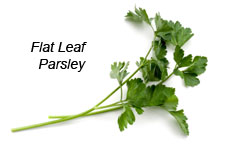 Parsley
- Readily recognizable and currently maligned as an overused
garnish, parsley deserves a second look as a fresh, mild herb. Flat
parsley, also known as French or Italian parsley, has the preferred
flavor for cooking compared with curly parsley whose ruffles make
for a good garnish. Parsley pairs well with fish, lemon, eggs, and
most vegetables. Parsley
- Readily recognizable and currently maligned as an overused
garnish, parsley deserves a second look as a fresh, mild herb. Flat
parsley, also known as French or Italian parsley, has the preferred
flavor for cooking compared with curly parsley whose ruffles make
for a good garnish. Parsley pairs well with fish, lemon, eggs, and
most vegetables.
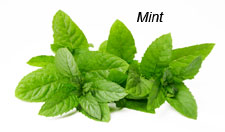 Mint
- Mint packs a punch as a culinary herb. Our palates are somehow
cooled by the mint, almost with a slight numbing sensation in the
mouth. Culinary uses of mint are prevalent in Middle Eastern dishes
and Indian foods. Mint
- Mint packs a punch as a culinary herb. Our palates are somehow
cooled by the mint, almost with a slight numbing sensation in the
mouth. Culinary uses of mint are prevalent in Middle Eastern dishes
and Indian foods. 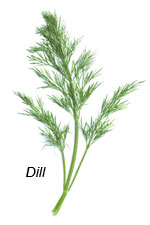 Mint
is one of just a few herbs that match well with fruit and chocolate.
It's easy to grow your own mint, though due to its aggressiveness it
should always be contained in a pot. Mint
is one of just a few herbs that match well with fruit and chocolate.
It's easy to grow your own mint, though due to its aggressiveness it
should always be contained in a pot.
Dill - The feathery fronds of dill
(a.k.a. dill weed) pair perfectly with fish and seafood. Dill gained
its reputation as an indispensable herb from northern and central
European cuisines whose root vegetables seem to have an affinity for
dill. Dill weed freezes well and holds its flavor better than dried
dill. Try dill in potato salad and salad dressings.
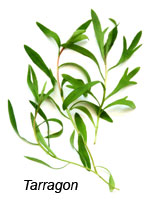 Tarragon
- The flavor of tarragon is strong, yet subtle. It has an anise or
licorice character that is famous in French cooking. The long
slender leaves add a classic flavor to vinegars, mustards, and
butters. Tarragon chicken and the classic Bearnaise sauce are two
favorite dishes that would be nothing without tarragon. The tarragon
flavor holds up well in slow-cooking applications. Tarragon
- The flavor of tarragon is strong, yet subtle. It has an anise or
licorice character that is famous in French cooking. The long
slender leaves add a classic flavor to vinegars, mustards, and
butters. Tarragon chicken and the classic Bearnaise sauce are two
favorite dishes that would be nothing without tarragon. The tarragon
flavor holds up well in slow-cooking applications.
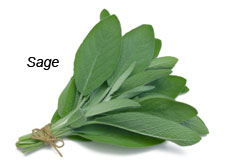 Sage
- Another hardy perennial, sage has Mediterranean origins with
beautiful soft gray-green coloring. Pungent and spicy, fresh sage
should be used readily once picked. Dried sage is quite a bit more
potent than fresh sage. Sage pairs well with apples, beans, onions
and tomatoes. Explore the multiple types of sage available including
tricolor sage, golden sage, clary sage and pineapple
sage. Sage
- Another hardy perennial, sage has Mediterranean origins with
beautiful soft gray-green coloring. Pungent and spicy, fresh sage
should be used readily once picked. Dried sage is quite a bit more
potent than fresh sage. Sage pairs well with apples, beans, onions
and tomatoes. Explore the multiple types of sage available including
tricolor sage, golden sage, clary sage and pineapple
sage.
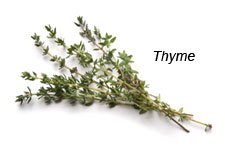 Thyme
- These tiny leaves pack a punch! Another Mediterranean herb, thyme
grows as a low-growing shrub. The leaves need to be stripped from
the woody stems prior to use. Thyme holds up well in long-cooking
applications and "plays well" with other herbs. Our favorite is
lemon thyme for both its taste and its appearance. Thyme
- These tiny leaves pack a punch! Another Mediterranean herb, thyme
grows as a low-growing shrub. The leaves need to be stripped from
the woody stems prior to use. Thyme holds up well in long-cooking
applications and "plays well" with other herbs. Our favorite is
lemon thyme for both its taste and its appearance.
It's hard
to end the list just with these herbs - there are so many more that
add delight to the garden and the kitchen . . . rosemary, chives,
marjoram. . . .
|
Cooking with
Herbs
|
Preparing and
using fresh herbs with confidence will release their magic into your
kitchen. Each herb grows differently and that impacts their handling
in the kitchen. Here are a few essential techniques for using fresh
herbs:
 Washing
Herbs - Rinse fresh herbs with water taking care
to expose the undersides of the leaves to the running water.
Alternatively, swish the herbs in a bowlful of cold water. Shake
excess water away and allow them to air dry for a few minutes before
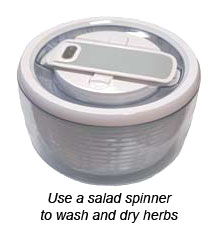
chopping. For larger quantities of leafy herbs, use a salad spinner
for washing and drying. Washing
Herbs - Rinse fresh herbs with water taking care
to expose the undersides of the leaves to the running water.
Alternatively, swish the herbs in a bowlful of cold water. Shake
excess water away and allow them to air dry for a few minutes before
chopping. For larger quantities of leafy herbs, use a salad spinner
for washing and drying.
Stripping the Leaves - For many
herbs it's just the leaves that are used in cooking. The stems may
be too woody or stringy to be palatable. The leaves of some herbs,
(i.e., thyme, tarragon, oregano), may be stripped easily from their
stem by pulling the stem through two pinched fingers. The leaves are
stripped away into a neat pile; discard the stems.
Knife Chopping - Many herbs are
used in chopped form. Use a chef's knife in a rocking m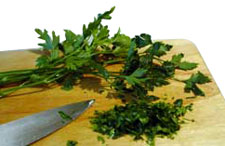 otion
to mince fresh herb leaves. Chop the herbs just as you're ready to
use them. The chopping process bruises the leaves and releases many
of the herb's essential oils and aromas. Capture these essences by
chopping and using immediately. otion
to mince fresh herb leaves. Chop the herbs just as you're ready to
use them. The chopping process bruises the leaves and releases many
of the herb's essential oils and aromas. Capture these essences by
chopping and using immediately.
Cutting with Herb Scissors -
Slightly odd looking, but amazingly effective, herb scissors have
multiple blades that cut simultaneously. Perfect ribbons and even
pieces are accomplished with each cut.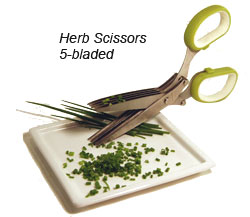
Food Processor Chopping - For
larger quantities of herbs, a food processor is invaluable for
achieving uniform results. Pulse 2-3 times, scrape down the sides
and repeat until the desired size of chopped herb is
reached.
Mini-Processor
Chopping - Small quantities of herbs, including garlic, are
an ideal use for a mini-processor. Use the same pulse and scrape
technique as with a larger food processor.
Chiffonade - This classic cutting
technique is an essential one to master with broad-leaved herbs such
as basil. Layer leaves on top of each other, then roll the layers
into a tight log with all leaf stems at one end. Thinly slice across
the log of leaves discarding the stem ends. 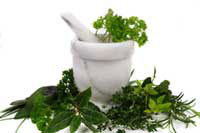 The
result is ribbons, or thin strips of fragrant herbs. Sprinkle the
chiffonade on top of your dish as in the traditional Caprese
Salad. The
result is ribbons, or thin strips of fragrant herbs. Sprinkle the
chiffonade on top of your dish as in the traditional Caprese
Salad.
Pounding - The
traditional method for many herbal preparations is with a mortar
& pestle. The mortar is the bowl portion and the pestle is the
pounding and grinding stick. Food is pulverized by pushing and
scraping the pestle against the sides of the mortar. Mortars and
pestles may be made of wood, porcelain, and conventionally,
stone.
|
Preserving Garden
Herbs
|
"Make hay while
the sun shines." Capture fresh herbs while they're available in
abundance. Like so much in the garden, the plenty comes all at once!
 Storing
Fresh Herbs - Refrigerate unwashed fresh herbs that you
intend to use soon. (If the herbs are wet, shake any excess water
away and allow to air dry prior to refrigerating). Place the herbs
in the warmest spot of your refrigerator. Many herbs, for example,
basil and mint, are very tender and susceptible to the 38 - 40°F
temperatures of an icebox; if too cold, the leaves will turn black.
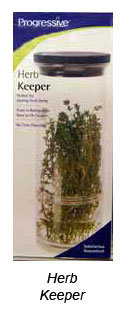
An herb keeper is a handy device that provides fresh water to the
stems and leaves while keeping the herbs cool in the refrigerator. Storing
Fresh Herbs - Refrigerate unwashed fresh herbs that you
intend to use soon. (If the herbs are wet, shake any excess water
away and allow to air dry prior to refrigerating). Place the herbs
in the warmest spot of your refrigerator. Many herbs, for example,
basil and mint, are very tender and susceptible to the 38 - 40°F
temperatures of an icebox; if too cold, the leaves will turn black.
An herb keeper is a handy device that provides fresh water to the
stems and leaves while keeping the herbs cool in the refrigerator.
Drying - Fresh herbs,
after washing as noted above, may be dried in several different
ways:
- Air
drying - Bunch the herbs together making a "bouquet." Tie
the stems together with kitchen twine and hang upside down in a
dark, well-ventilated place.
- Oven
drying - Arrange the herb leaves in a single layer on a
baking sheet. Place in a warm oven on the lowest setting possible.
Leave undisturbed in the oven until the leaves are thoroughly
dried.
- Microwave
drying - Spread the herbs between two paper towels and
microwave in 30 second bursts. Remove the leaves as they become
dry. Allow to cool. Brighter greens seemed to be retained
with this method of drying.
 Storing
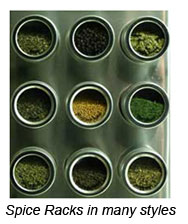
Dried Herbs - Once dried, store the herbs in a dark
location in an airtight container. Store the container in a cool
location - not near the heat of a stove. Plan to use most dried
herbs within six months. Storing
Dried Herbs - Once dried, store the herbs in a dark
location in an airtight container. Store the container in a cool
location - not near the heat of a stove. Plan to use most dried
herbs within six months.
 Freezing - Wash and chop the herbs.
Package in thin layers for quick freezing. Alternatively, add a
small amount of water to the chopped herbs and freeze the slurry in
ice cube trays. Once frozen, store the cubes in a freezer-grade
zipper bag and use as needed. Olive oil may also be used to create
an herbal suspension for freezing. Freezing - Wash and chop the herbs.
Package in thin layers for quick freezing. Alternatively, add a
small amount of water to the chopped herbs and freeze the slurry in
ice cube trays. Once frozen, store the cubes in a freezer-grade
zipper bag and use as needed. Olive oil may also be used to create
an herbal suspension for freezing.
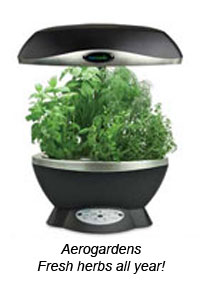
Off Season Herbs with Aerogarden -
To enjoy fresh summer herbs all year-long, start an indoor
Aerogarden. Specially created for the kitchen, Aerogardens provide
fresh herbs, petite tomatoes and other crops on a consistent basis
during the off seasons. New Aerogarden models are available that are
smaller in size than the original Aerogarden, including a model that
fits handily in a corner.
|
Cooks'Wares' Herb
Tips
|
 Tip
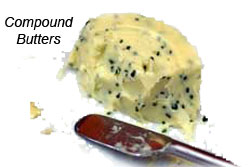
#1: Enjoy some compound butters with your harvest
of herbs. Soften a stick of butter; mix 2-3 tablespoons of finely
chopped, fresh herbs into the butter until evenly distributed. Roll
the butter into round logs, wrap tightly and freeze. Cut slices of
the butter as needed. Use on bread, vegetables, or as a simple pasta
sauce. Tip
#1: Enjoy some compound butters with your harvest
of herbs. Soften a stick of butter; mix 2-3 tablespoons of finely
chopped, fresh herbs into the butter until evenly distributed. Roll
the butter into round logs, wrap tightly and freeze. Cut slices of
the butter as needed. Use on bread, vegetables, or as a simple pasta
sauce.
Tip #2:
Add a stunning savory garnish with some fried sage. Heat 2
tablespoons of butter in a small skillet. Toss in a dozen or so
individual sage leaves and allow them to sauté until crisp. The
brown butter and sage flavor meld into perfect herbal
"glitter."
Tip
#3: A classic tip, scoop up bunches of basil at
farmers' market and "put by" the basil bounty for the cooler days
ahead. Strip the leaves from the stems, wash, spin, or pat dry. Chop
the leaves with the help of some olive oil in your food processor.
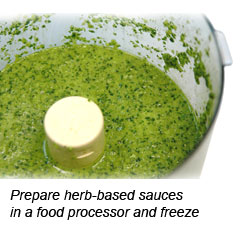 Freeze
small quantities of the paste in ice cube trays. Once frozen,
package the cubes in freezer-grade zipper bags. Access the cubes for
inclusion in a soup or sauce, or for finishing into a
pesto. Freeze
small quantities of the paste in ice cube trays. Once frozen,
package the cubes in freezer-grade zipper bags. Access the cubes for
inclusion in a soup or sauce, or for finishing into a
pesto.
Tip #4:
Dried herbs are generally added at the beginning of recipes so that
they can rehydrate and release their flavors. Fresh herbs are
generally added just at the end of cooking. A little heat will often
help to bloom the herb's flavor, fresh or dried.
Tip #5: When cooking with
herbs, add a little wine or vermouth to the mix. Alcohol dissolves
certain essential oils releasing flavors in a way that water and oil
are not able to
accomplish.
|
Q &
A's
|
 Q: What's the difference
between "herbs" and "spices"? Q: What's the difference
between "herbs" and "spices"?
A: An innocent question
with a lot of different answers depending who you ask! The consensus
seems to be that an "herb" refers to the fresh form of the plant's
leaves, while "spice" refers to dried forms of aromatic plants and
can include seeds, bark, stems, and other plant parts. This
definition begs the question whether dried herbs are then spices,
but we'll let you choose that answer!
Q: What is the ratio for
substituting dried herbs for fresh herbs and fresh for
dried?
 A:
Dried herbs carry more concentrated flavor than fresh herbs. If the
recipe calls for fresh herbs, use one-third the quantity of dried
herbs. Conversely, if the recipe calls for dried herbs, use three
times the quantity of fresh herbs. A:
Dried herbs carry more concentrated flavor than fresh herbs. If the
recipe calls for fresh herbs, use one-third the quantity of dried
herbs. Conversely, if the recipe calls for dried herbs, use three
times the quantity of fresh herbs.
Q: What does the term "bouquet
garni" mean?
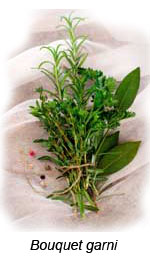
A: In French cooking, bouquet
garni, refers to a bundle of herbs tied with string or wrapped in
cheesecloth and added to slow-cooking dishes. The bouquet garni is
removed from the pot prior to serving. The classic French version
consists of bay leaf, parsley, and thyme. Other combinations of
herbs can be assembled according to the dish being
prepared.
Q: What is
the correct pronunciation of herb?
A: Some say "erb,"
others pronounce the "h" in the word "herb." It seems to be an
American quirk to drop the "h." Some say it's a throwback to early,
French pronunciations of the word. Most other English-speaking
countries pronounce the "h." Both pronunciations are so well
entrenched in culture that they're both considered correct - it's a
matter of dialect and local custom which one you choose to
say.
Q: How long do
dried herbs remain fresh?
A: Freshness is dependent on
the storage conditions, but experts recommend keeping dried herbs no
longer than six months. Buy small quantities of excellent quality
herbs for best recipe results. To check freshness, crumble a few
leaves between your fingers and assess the aroma's
strength. |
Cooks'Wares Cookbook
Review
|
Herbs &
Spices, a Cook's Reference by Jill Norman. Photography by
Dave King. Copyright 2002. Published by DK Publishing, Inc., New
York, NY.
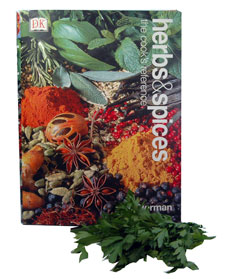 True
to its title, this book is primarily a reference on scores of herbs
and spices from a cook's point of view. The book is divided into
three parts: Herbs, Spices and Recipes. Each herb and spice is
lavishly illustrated with stunning photography. The photos depict
the herb or spice in its various forms so that each entry becomes a
definitive field guide for the cook. While official botanical names
are noted, the bent of information is all culinary. The taste is
described, culinary uses identified, buying and storing instructions
noted, and tips on growing your own presented. We thought we knew
herbs and spices fairly well, but each entry offered us new
information. The featured herbs and spices are global; we found this
the most helpful aspect for its ability to broaden our knowledge
base for ethnic cooking explorations. This global reach is echoed in
the Recipe section where spice mixtures are organized by country of
origin. The book concludes with loaded chapters on Sauces and
Condiments, Marinades, Soups and Light Dishes, Fish, Meats,
Vegetables, Pasta and Grains, and Desserts and Drinks. A helpful
bibliography and excellent index end the book. It's a beautiful book
to the eye and a prime resource for the kitchen
cook. True
to its title, this book is primarily a reference on scores of herbs
and spices from a cook's point of view. The book is divided into
three parts: Herbs, Spices and Recipes. Each herb and spice is
lavishly illustrated with stunning photography. The photos depict
the herb or spice in its various forms so that each entry becomes a
definitive field guide for the cook. While official botanical names
are noted, the bent of information is all culinary. The taste is
described, culinary uses identified, buying and storing instructions
noted, and tips on growing your own presented. We thought we knew
herbs and spices fairly well, but each entry offered us new
information. The featured herbs and spices are global; we found this
the most helpful aspect for its ability to broaden our knowledge
base for ethnic cooking explorations. This global reach is echoed in
the Recipe section where spice mixtures are organized by country of
origin. The book concludes with loaded chapters on Sauces and
Condiments, Marinades, Soups and Light Dishes, Fish, Meats,
Vegetables, Pasta and Grains, and Desserts and Drinks. A helpful
bibliography and excellent index end the book. It's a beautiful book
to the eye and a prime resource for the kitchen
cook.
|
Recipes featuring Summer
Herbs
|
Recipes excerpted from Herbs &
Spices, a Cook's Reference by Jill Norman. Photography by
Dave King. Copyright 2002. Used with permission of the publisher, DK
Publishing, Inc., New York, NY. All rights
reserved.
Salsa
Verde
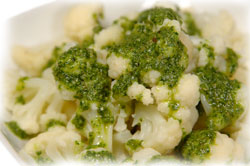 This
rather generic name applies to dozens of green sauces. This version
deploys parsley, a choice of mint or basil, and some punch from
garlic and capers. The result of 5 minutes of effort was a tasty
sauce for our cauliflower. If you're looking for ways to jazz up any
vegetable, meat or pasta, this version of salsa verde will yield
excellent results. This
rather generic name applies to dozens of green sauces. This version
deploys parsley, a choice of mint or basil, and some punch from
garlic and capers. The result of 5 minutes of effort was a tasty
sauce for our cauliflower. If you're looking for ways to jazz up any
vegetable, meat or pasta, this version of salsa verde will yield
excellent results.
Click here to view the illustrated
recipe.
Click here for a printable version of
the recipe.
Pesto
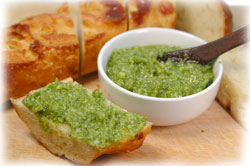 The
summer classic, pesto, has been popular for a long time, some would
say past popularity. We think it still deserves attention during
fresh basil season. If you're looking for some variation, this
recipe has three - Cilantro-Walnut (our new favorite pesto!),
Parsley-Almond, and Arugula-Pine Nut. Equally at home as a
bruschetta topping, a pasta dish, or a vegetable sauce, pesto still
rules! The
summer classic, pesto, has been popular for a long time, some would
say past popularity. We think it still deserves attention during
fresh basil season. If you're looking for some variation, this
recipe has three - Cilantro-Walnut (our new favorite pesto!),
Parsley-Almond, and Arugula-Pine Nut. Equally at home as a
bruschetta topping, a pasta dish, or a vegetable sauce, pesto still
rules!
Click here to view the illustrated
recipe.
Click here for a printable version of
the recipe.
Green
Mojo
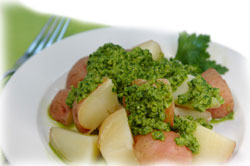 Inspired
by a potato dish from the Canary Islands, this herb-based sauce gets
its mojo from three hot peppers. It gets its freshness from parsley,
and added complexity from a little cumin. The sauce base is a
combination of wine vinegar and olive oil. Also ready in 5 minutes,
this sauce is delicious on fish, meat, and even as a salad
dressing. Inspired
by a potato dish from the Canary Islands, this herb-based sauce gets
its mojo from three hot peppers. It gets its freshness from parsley,
and added complexity from a little cumin. The sauce base is a
combination of wine vinegar and olive oil. Also ready in 5 minutes,
this sauce is delicious on fish, meat, and even as a salad
dressing.
Click here to view the illustrated
recipe.
Click here for a printable version of
the
recipe.
| |




 from
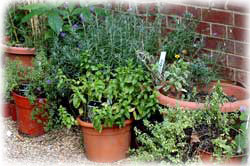
complimentary to defining, the availability of summer
herbs is upon us! Herbs and spices often define a
cuisine and are grouped together in classic dishes by
virtue of their original geographical proximity. Fresh
summer herbs awaken improvisational possibilities in the
kitchen. In this issue we survey a few essential kitchen
herbs, offer some information on cooking with herbs, and
recommend tools and tips for managing the profusion of
herbs coming from the garden. We wrap up with three
herb-based sauce recipes that are ready with no cooking
in five minutes. They're sure to add delightful, fresh
flavors to a host of
foods.
from
complimentary to defining, the availability of summer
herbs is upon us! Herbs and spices often define a
cuisine and are grouped together in classic dishes by
virtue of their original geographical proximity. Fresh
summer herbs awaken improvisational possibilities in the
kitchen. In this issue we survey a few essential kitchen
herbs, offer some information on cooking with herbs, and
recommend tools and tips for managing the profusion of
herbs coming from the garden. We wrap up with three
herb-based sauce recipes that are ready with no cooking
in five minutes. They're sure to add delightful, fresh
flavors to a host of
foods.