
Next Issue:
Septermber 23, 2010
"'Bacon-licious"
|
Bridal Registry
| Rachael Cox &
Nicholaus Ohde Oct. 2, 2010 Bethany Crane &
Evan Bassler May 28, 2011 Access our Registry
on our website!
www.cooksemporiumltd.com |
|
|
Cajun Country - How Y'All Are?
| The Gulf Coast has been on our minds this summer - it's been a
challenging time there. It doesn't take long for our thoughts to turn to
the food of the region and the rich heritage found in the cuisines of
that unique area. Appreciating the culinary traditions of Louisiana, and
more specifically, Cajun cooking, helps us connect with our neighbors.
IN THIS ISSUE,
we debunk some impressions of what you might think is "Cajun food" and
replace it with an updated understanding of what "real Cajun" cooking
is. Cast iron cookware seems to go along with this style of cooking; we
review just why cast iron is a kitchen classic. Three "Real Cajun"
recipes are showcased; they teach us the techniques of layering fresh,
available ingredients into some of the most delicious food you'll ever
cook or eat!
|
Saturday Morning Demonstrations
|
WELCOME! Our Saturday morning cooking demonstrations resume on Saturday, September 11th. Cooking demos begin promptly at 10:00a.m. each Saturday. Class fee of $5. Pre-registration is not needed. Please note that seating is on a first-come basis. We suggest early arrival for best seating.
Click here for our full Fall Cooking demonstration schedule.
Saturday, September 11 - Coney Island Sauce with Margaret Welder. This is my recipe for the "Coney Dog" sauce. Keep it in a crock pot so it would work nicely for game days. A change from grilled burgers.
Saturday, September 18 - Demo at 10:00am
Dinner and Drinks: Cooking and Pairing Dishes with Beer with Jeff Irvin and Aaron Vetter of Olde Main Restaurant.
Join Jeff "Puff" Irvin, Head Brewer, and Chef Aaron Vetter of Olde Main Restaurant & Brewing Co. as they prepare Chicken Tortellini and Meatball Sliders today.
Saturday, September 25 - Demo at 10:00am
Fall Family Meal with Karen
Davis.
Just in time for your fall gatherings, Karen brings us an easy family menu that starts with a refreshing Peach Iced Tea and features Warm 'n Cheesy Ham Sandwiches. She'll round out the meal with S'more Sandwich Cookies.
Saturday, October 2 - Demo at 10:00am
Homemade Pasta & Ravioli with Marg
Junkhan.
There are as many variations of ravioli as there are cooks in Italy. Two different fillings - a cheese filling and a chicken filling - will be featured today.
Saturday, October 9 - Demo at 10:00am
Lentil Salad and Vegetable Gratin with Beatriz
Spalding.
The fall vegetable gratin will include vegetables such as zucchini, yellow squash and eggplant from the farmer's market. Gratins can make a whole meal when accompanied by some cheese, crusty bread and wine!
Saturday, October 16 - Demo at 10:00am BBQ at its Best with Jason &
Jenny Berg, Owners, Smokin' Caboose BBQ and Catering of Ames.
Nothing brings out flavor like grilling. If you missed our first outdoor grilling demo you're not going to want to
miss this one. Big taste and easy-to-make recipes you can do right at
home, or take to a tailgate. Meanwhile, visit them at www.smokincaboose.com
Tuesday October 19th - Knife Skills Clinic - 6:00 pm - Learn basic knife skills, as well as the
different blade shapes and their uses while Clarke Stone, Wusthof®
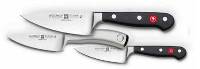 representative, prepares something for you to sample. Each participant
will receive a FREE Wusthof® paring knife. Pre-registration and
pre-payment required. Please contact us to reserve your space as soon as
possible. Space is limited. Cost is $40.00. representative, prepares something for you to sample. Each participant
will receive a FREE Wusthof® paring knife. Pre-registration and
pre-payment required. Please contact us to reserve your space as soon as
possible. Space is limited. Cost is $40.00. |
|
On Sale Now!
|

|
NEW at Cook's Emporium
|

|
The Real Thing - Cajun Cooking
| The constant evolution of cuisines is no more apparent than in the
development of Louisiana's food traditions. With deep culinary customs
from generations rooted from elsewhere, the unique techniques survive
and are applied to locally available food.  The marriage of the past, with the food at hand, produces a new harmony of flavors and gustatory pleasures. The marriage of the past, with the food at hand, produces a new harmony of flavors and gustatory pleasures.
What is "Cajun?" Cajun is a verbally contracted form of the word Acadian. French
settlers had made their home in the Acadia region of Nova Scotia,
Canada. Beginning in 1755, these settlers were expelled from Canada and
forced to relocate elsewhere. Some refugees returned to France, others
found homes further south along the Atlantic coastline. Over time, a
large number of Acadians found life in Southern Louisiana accepting and
enabling. Cajun is an entire culture of traditions, not just a cooking
style.
 Connected to the Sea and Land - Acadians initially arrived in Nova Scotia from French seaports. Life
in Nova Scotia similarly revolved around the sea. It was logical that
the refugees fleeing Nova Scotia be attracted to another coastal area
rich in fish and shellfish - a ready food source. Similarly, the
adjoining wetlands yielded new plants and herbs that also typify Cajun
cooking. Connected to the Sea and Land - Acadians initially arrived in Nova Scotia from French seaports. Life
in Nova Scotia similarly revolved around the sea. It was logical that
the refugees fleeing Nova Scotia be attracted to another coastal area
rich in fish and shellfish - a ready food source. Similarly, the
adjoining wetlands yielded new plants and herbs that also typify Cajun
cooking.
Cajun Cooking -
Early on, the Cajun arrivals were befriended by Native Americans of the
area and became apt students of learning about and adapting to the
area's indigenous foods. Cajun cooking is distinguished by wild game,
seafood, and locally occurring vegetables and herbs. The area is
suitable for rice growing, and the grain holds a large presence on any
Cajun table.
 One-Pot Meals- A common characteristic of Cajun cooking is its one-pot nature. In
sequence, layers of flavors are carefully built. The aromas are divine
and guide the cook in determining when the dish is ready for the next
step. The result might be a rich stew, or a hearty rice dish. One-Pot Meals- A common characteristic of Cajun cooking is its one-pot nature. In
sequence, layers of flavors are carefully built. The aromas are divine
and guide the cook in determining when the dish is ready for the next
step. The result might be a rich stew, or a hearty rice dish.
Charcuterie - German influences brought sausage-making skills to the region and
through the generations, Cajun ingenuity has adapted the techniques into
some of the best tasting links - andouille, boudin, and many other
regional meat and seafood traditions.
 Not That Spicy- Sure there are pungent, zingy flavors in Cajun cooking, but "real
Cajun" cooking does not have a "spicy" character to the extent that you
might think. Contrary to popular belief and the profusion of "Cajun"
chain restaurants, super hot spices and blackened "whatever," are more
contrivances of popularized Cajun, not true Cajun tradition. Salt, black
pepper, and cayenne are the primary spices with herbs adding nuance. Not That Spicy- Sure there are pungent, zingy flavors in Cajun cooking, but "real
Cajun" cooking does not have a "spicy" character to the extent that you
might think. Contrary to popular belief and the profusion of "Cajun"
chain restaurants, super hot spices and blackened "whatever," are more
contrivances of popularized Cajun, not true Cajun tradition. Salt, black
pepper, and cayenne are the primary spices with herbs adding nuance.
Joie de vivre - There's not a Cajun or Creole cookbook that doesn't have the phrase, "joie de vivre"
included somewhere. Literally translated as "the joy of living," the
phrase holds more than words, but expresses an attitude, a celebration
of life in the midst of good company. And, where there are people,
there's good food. We should all be so lucky to keep a little Cajun joie de vivre handy!
|
Cast Iron Cooking
| Before there was stainless steel and non-stick cookware, cast iron
cookware pieces were the workhorses of the kitchen. Despite various
cooking surface developments, there is still a vital role for
traditional cast iron in today's kitchen.
 
Cast iron cookware offers several benefits:
(1) Iron is an excellent conductor of heat.
(2)The heavy nature of cast iron, along with conductivity, produces a very
even heat; the edges of the pan will cook as efficiently as the center
of the pan.
(3) Micro-portions of usable dietary iron will be added to your food.
(4) Cast iron can withstand very high heat cooking temperatures making it useful for searing and frying.
(5) Cast iron pans are versatile for stovetop or oven cooking.
 Cast Iron Cookware Comes in Many Forms- While a cast iron skillet may be the most common piece, cast iron
works its magic as a large pot, as in Cajun cooking, or in quality
cookware as with griddles, or bakeware as with cornbread pans, or muffin
pans. Cast Iron Cookware Comes in Many Forms- While a cast iron skillet may be the most common piece, cast iron
works its magic as a large pot, as in Cajun cooking, or in quality
cookware as with griddles, or bakeware as with cornbread pans, or muffin
pans.
Seasoning New Cast Iron- New cast iron requires seasoning prior to use. Seasoning seals the
pores in the metal surface with oil and creates a barrier layer
preventing rust formation that otherwise might occur in the presence of
water or humidity. Seasoning also creates a naturally nonstick surface
on the pan. 

Season a new cast iron piece with these steps:
(1) Thoroughly clean the new piece with hot soapy water. Towel dry completely.
(2) With a paper towel, apply a thin coat of vegetable oil on all of the pan's surfaces
(3) Place the pan, upside down, in a 350°F oven on top of a piece of aluminum foil. Bake the pan for one hour.
(4) Remove from the oven, allow to cool, wipe with a dry towel.
Pre-seasoning- Most of today's new cast iron is seasoned at the factory. This
pre-seasoning process is similar to the seasoning process done at home; a
thin vegetable oil coating is placed on the pan and the pan heated.
Pre-seasoning by the manufacturer makes your cast iron piece immediately
usable.


Everyday Care for Cast Iron- Clean cast iron cookware by simply wiping it out, or if needed, brush
or scrub any residue away. Rinse with very hot water. Thoroughly dry
immediately with a towel. A swipe of the inside surface with a paper
towel moistened with a little vegetable oil will recondition the
surface, and make it ready for the next use. NEVER SOAK your cast iron
piece; the water will enter the pores of the pan creating conditions for
rust development. NEVER place your cast iron in a dishwasher.
|
Smart Cajun Cooking Tips
|  Tip #1:
If the oven or burner is still warm from cooking, use its residual heat
to further dry out your cast iron pot or skillet after rinsing and
cleaning. The mild heat will evaporate any moisture remaining in the
pores of the cookware. Tip #1:
If the oven or burner is still warm from cooking, use its residual heat
to further dry out your cast iron pot or skillet after rinsing and
cleaning. The mild heat will evaporate any moisture remaining in the
pores of the cookware.
Tip #2:
If you've been lucky enough to inherit some cast iron cookware, or find
a piece at a garage sale, you may have a collectible on your hands. The
bottom of a cast iron piece usually has the company imprint and other
key identification information. Names like Griswold and Wagner are
old-time, and often valuable, names in cast iron cookware.
Tip #3:
The formation of rust can be avoided by thoroughly drying the pan after
each use. Also, take care in how you store the pan. Hang the pan, or
line the inside with a paper towel prior to stacking other pots or pans
inside the cast iron pan.
 Tip #4:
Seeding a jalapeno pepper, or any small hot pepper can be accomplished
easily with the help of a demitasse spoon. The spoon's small size fits
neatly inside a halved pepper. With one spoon scrape, seeds and ribs are
removed. Take care when handling any hot pepper to not touch your eyes
afterwards. Tip #4:
Seeding a jalapeno pepper, or any small hot pepper can be accomplished
easily with the help of a demitasse spoon. The spoon's small size fits
neatly inside a halved pepper. With one spoon scrape, seeds and ribs are
removed. Take care when handling any hot pepper to not touch your eyes
afterwards.
Tip #5:
To remove any stubborn stuck-on food, place water in the cast iron pan
and allow to boil for a few minutes. The residue should be easily
removable after this hot water bath treatment.
Tip# 6: Is Gulf seafood safe to eat? This recent news article describes the testing going on.
|
Q & A's
|
 Q: What is the difference between Cajun and Creole? Q: What is the difference between Cajun and Creole?
A: Both Cajun and Creole cooking are rooted in Louisiana geography and the
ingredients that thrive in that region. It's thought that Creole
cooking originated with more of an aristocratic French, Italian, German,
and Spanish heritage with a stronger emphasis on applying classical
cooking techniques to the region's ingredients. Cajun cooking is hearty
country cooking, again using the ingredients at hand, but in a more
rustic fashion.
Q: What are bay leaves?
A: Quite common in Cajun cooking, bay leaves are dried, whole leaves
plucked from a laurel tree. Interestingly, a bay leaf does not develop
its culinary flavors until after it's been dried and stored for a while.
The mild, distinctive flavor imparts an essential taste when called for
in a recipe.
Q: What is the technique of "blackening?"
A: Contrary to popular notions about Cajun cooking, "blackening" is not Cajun.  Chef
Paul Prudhomme of New Orleans popularized the technique in the early
1980s, and while he is Cajun, the technique is not. Blackening involves
enrobing the fish, chicken, or meat choice in a blend of herbs and
spices. The meat is cooked on very high heat that blackens the spice
coating while the inside steams. Chef
Paul Prudhomme of New Orleans popularized the technique in the early
1980s, and while he is Cajun, the technique is not. Blackening involves
enrobing the fish, chicken, or meat choice in a blend of herbs and
spices. The meat is cooked on very high heat that blackens the spice
coating while the inside steams.
Q: My cast iron pan has rust in it. What should I do?
A: A rusted cast iron pan can be fixed easily. Scour the rust away with a
brush, or in really tough situations, some steel wool. Wash in hot,
soapy water and dry thoroughly. Coat all surfaces with a paper towel
soaked with vegetable oil. Rub the oil into the surfaces, especially the
rusted areas. Season the pan (see above) by baking in the oven for an
hour.
|
Cookbook Review
| REAL CAJUN
by Donald Link with Paula Disbrowe. Copyright © 2009 by Donald Link
with Paula Disbrowe. Photographs Copyright © 2009 by Chris Granger.
Published by Clarkson Potter, a division of Random House, Inc.
James Beard Foundation Cookbook Award Winner 2010
Category: American Cooking
 What
a delightful find this book was! Very deserving of the prestigious
award received earlier this year. The chef-owner of two New Orleans
restaurants, Herbsaint and Cochon, this book is all about home-cooking,
his Cajun home in Southwestern Louisiana. The title is no accident, Chef
Link introduces us to real Cajun cooking, not the contrived Cajun that
inaccurately kidnapped the term in recent years. Donald Link's Cajun
captures a culture by featuring fresh, local food traditions. Part
ingredient, and part technique, he shares with us how to coax flavor
from food and create layer upon layer of taste. The result is simple and
complex all at once. The food is richly satisfying. Interspersed among
the recipes are reveries and insights into Cajun life and culture. A
generous number of color photographs capture not only the food, but also
vignettes of life in Cajun country. Our favorite photograph is of a
toddler aptly handling a freshly cooked crab. After working and enjoying
this cookbook, we feel like we've visited Cajun Country first-hand and
discovered a rare American treasure. What
a delightful find this book was! Very deserving of the prestigious
award received earlier this year. The chef-owner of two New Orleans
restaurants, Herbsaint and Cochon, this book is all about home-cooking,
his Cajun home in Southwestern Louisiana. The title is no accident, Chef
Link introduces us to real Cajun cooking, not the contrived Cajun that
inaccurately kidnapped the term in recent years. Donald Link's Cajun
captures a culture by featuring fresh, local food traditions. Part
ingredient, and part technique, he shares with us how to coax flavor
from food and create layer upon layer of taste. The result is simple and
complex all at once. The food is richly satisfying. Interspersed among
the recipes are reveries and insights into Cajun life and culture. A
generous number of color photographs capture not only the food, but also
vignettes of life in Cajun country. Our favorite photograph is of a
toddler aptly handling a freshly cooked crab. After working and enjoying
this cookbook, we feel like we've visited Cajun Country first-hand and
discovered a rare American treasure.
|
Real Cajun Recipes
| Braised Sausage with Chiles
View & Print
Our
cast iron skillet was perfect for making this dish. Beginning with a
quick sear of the sausages, the flavor layers of peppers and onions
melded together and simmered to perfection. The aromas were rich and
engaging, nearly as good as the eating. There was plenty of sauce to top
both the sausages and the rice.

Cathy's Shrimp, Corn, and Tomato Stew
View & Print
Again,
this recipe guides the novice Cajun cook in creating flavor layers in
one large pot. This recipe is a great example of a roux-based stew. This
initial key step sets the tone for the rest of the dish. Fresh
vegetables and shrimp make a hearty, satisfying stew. The recipe makes a
lot of stew, but is easily frozen, or halved.
 Lake Charles Dirty Rice Lake Charles Dirty Rice
View & Print
In
his recipe introduction, the author appropriately notes that at a
family function there were six dishes of dirty rice, all the same, yet
entirely different. This recipe employs the magic of "brown bits" in
creating a rice dish that has quickly become one of our favorites.
You'll enjoy adding your own improvisations to the mix.
Reprinted from the book, Real Cajun by Donald Link with Paula Disbrowe. Copyright © 2009 by Donald Link
with Paula Disbrowe. Published by Clarkson Potter, a division of Random
House, Inc. 2009. All rights reserved.
|
|