"Fix It Fast, Cook It Slowly" OCTOBER 7 / 2010 / VOL 1 / ISSUE 4
|
|
|
QUICK LINKS
|
NEXT ISSUE: Oct. 21, 2010:
"Cinnamon Bread"

 _________________ _________________
Looking ahead:
November
Cooking Classes
are on the
website now!
Click here to view,
then register early!
_________________
|
|
|
SUPPER'S READY!
| It's a dream come true, walk in the door after a long day at work and
supper is ready! As you step across the threshold, the waiting aromas
let you know it's going to taste good. For the cooler season ahead,
we've moved our slow cooker to the front of the countertop in our
kitchen. Delicious food with little effort awaits!
IN THIS ISSUE,
we explore one of our favorite cooking techniques, slow cooking. Just
how does it work? Where does slow cooking excel, (and where does it not
perform)? We cover what's important in choosing a slow cooker, 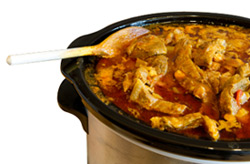 and
how to care for your new BFF (best friend forever) appliance. You'll find
plenty of tips for advancing your slow cooking skills and three
appetizing recipes that showcase slow cooking at its best. and
how to care for your new BFF (best friend forever) appliance. You'll find
plenty of tips for advancing your slow cooking skills and three
appetizing recipes that showcase slow cooking at its best.
|
BECOME A FOXFIRE FRIEND!
|

|
FALL COOKING CLASSES!
|
 Looking for fun ways to learn? There's something for everyone, young, old, novice or expert. Join us for some good times in our kitchen! Looking for fun ways to learn? There's something for everyone, young, old, novice or expert. Join us for some good times in our kitchen!
Click on the class title for all the details, then REGISTER ONLINE!
Or, call the store at (864) 242-0742
to register by phone.
Knife Skills - Hands On
Saturday, October 9, 2010 - 11:00 AM - Chef Ray Roback, Former French Culinary Institute Instructor
Italian Pasta Sauce History
Tuesday, October 12, 2010 - 6:30 PM - Chef Brady Brewer, Executive Chef, Davini's Restaurant
Soups Rule!
Monday, October 18, 2010 - 6:30 PM - Chef Mark Nicholas, The New York Butcher Shoppe
Tuscany For Two - Hands On
Wednesday, October 20, 2010 - 6:30 PM - Chef Alyn Abrams, Foxfire's Own Chef
Goulish Party Food for Jr. Chefs (Ages 6-11)
Saturday, October 23, 2010 - 10:30 AM - Chef Teresa Hoover, Former Art Instructor, Shannon Forest School
Wow the Crowd!
Tuesday, October 26, 2010 - 6:30 PM - Chef Alyn Abrams, Foxfire's Own Chef
Beautiful Asian Hors d' oeurves
Thursday, October 28, 2010 - 6:30 PM - Chef Kumi Hanada, Former Chef, Nippon Center
November Cooking Classes are on the website now.
Click here to check them out and to register!
|
|
|
|
SAVE THE DATE!
| 
|
HOW SLOW COOKING WORKS
|  Low Temperature Cooking - Slow
cooking methods may well be called "Low Temperature" cooking. A slow
cooker provides a stable environment where food is gradually brought to a
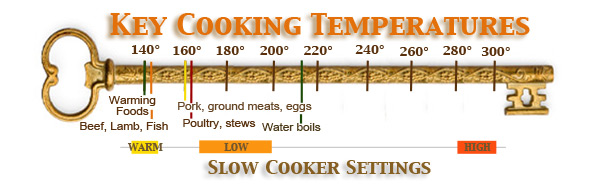
temperature of 170-200°F on a low setting, or to 280-300°F on a high
setting. By exposing food to only low temperatures for 7-10 hours, the
food gradually reaches the temperature of its surroundings, cooking in
the process. The result is perfectly cooked food. Low Temperature Cooking - Slow
cooking methods may well be called "Low Temperature" cooking. A slow
cooker provides a stable environment where food is gradually brought to a
temperature of 170-200°F on a low setting, or to 280-300°F on a high
setting. By exposing food to only low temperatures for 7-10 hours, the
food gradually reaches the temperature of its surroundings, cooking in
the process. The result is perfectly cooked food.
Key Temperatures- Cooking is practical science in action. Key temperatures while
cooking accomplish the necessary cooking tasks of tenderizing, killing
bacteria, and releasing flavors. Below these temperatures, harmful
bacteria may not be killed, and may even proliferate. Most stove cooking
utilizes hot temperatures and seeks a suitable internal temperature
quickly. Slow cooking begins with the end in mind and seeks an
equilibrium between the cooking environment and the food.
Time vs. Temperature- In exchange for fast-cooking high temperatures, more time is required
for the food to reach a safe cooking temperature and become tender.
That's where the advantage of slow cooking becomes apparent. With low
heat, food is started far ahead of eating time, and is able to be left
unattended - a multi-tasker's dream.
| 
|
Slow cooking excels in several ways:
(1) Tough to Tender Meats
-- Tough, inexpensive meats become tender with slow cooking. Slow
cooking softens the connective tissues gradually while preserving the
tenderness of the muscle protein.
(2) Unattended Cooking- Assemble the ingredients, turn it on, and walk away! This feature is
perhaps one of the biggest benefits of slow cooking. No stirring is
required; there's little chance of burning at these low temperatures.
(3) One-pot Convenience - A one-pot meal is convenient to make and serve. It is energy efficient by nature and clean up is easy.
(4) Dried to Tender Beans- Beans provide great nutrition. Cook dried beans in a slow cooker to
save money, to eliminate the soaking step, and to make beans more easily
included in your diet. Canned beans are about four times as expensive
as dried beans.
(5) Economical - Slow cookers
utilize less expensive cuts of meat, access cheap bean nutrition, all
while using a minimal amount of energy. The real economy comes at the
end of the day knowing that supper is waiting at home and expensive
eating out or carryout is an unneeded option. |
As great as slow cooking is, it is not appropriate or useful all of the time.
(1) Expensive Meat Cuts - Tender cuts of meat will not fare well in a slow cooker; use tough, inexpensive cuts for best results.
(2) Seafood Cooks Too Quickly- Seafood cooks quickly at low temperatures; the elongated heat of a
slow cooker serves no purpose and can toughen the seafood. Add seafood
at the end of slow cooking.
(3) Dairy Not Heat Tolerant - Milk and cheese may separate during long cooking. Add dairy ingredients at the end of cooking.
(4) Some Baking, Yes, Other Baking, No- Slow cookers can "bake" cakes and breads, but cannot turn out
cookies, pies, and other pastries where higher temperatures are
required.
(5) Browning Meats - Many meat dishes
benefit from a browning step that sears the surface and produces
flavorful caramelization. Slow cooking does not produce any tasty brown
bits; some recipes call for a separate browning step prior to adding to
the pot.
(6) Color Appeal - Slow-cooked foods often lose their color. Compensate with some vibrant garnishes.
|
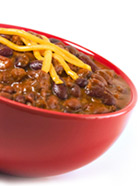 | Overcooking
- While it is nearly impossible to burn food while slow cooking, it is
possible to overcook the food and have it become undesirable. Follow
reliable recipes and suggested times. Slow-cooked dishes that are more
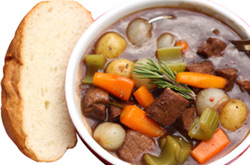
forgiving and can patiently wait for you include soups, stews, beans,
and larger cuts of meat. Grains, many vegetables, and desserts require
timing that is more precise.
Storing Slow-Cooked Dishes
- Once served, transfer any leftovers to a storage container, allow to
cool, then refrigerate - all within 2 hours of completed cooking. (The
heat-retaining properties of the crock make it unsuitable for cooling
foods quickly enough). Slow cookers work too slowly to be useful in
reheating foods. However, warmed foods can be kept warm in a pre-heated
slow cooker. Pay attention to safe food practices regarding timing and
temperatures. |
|
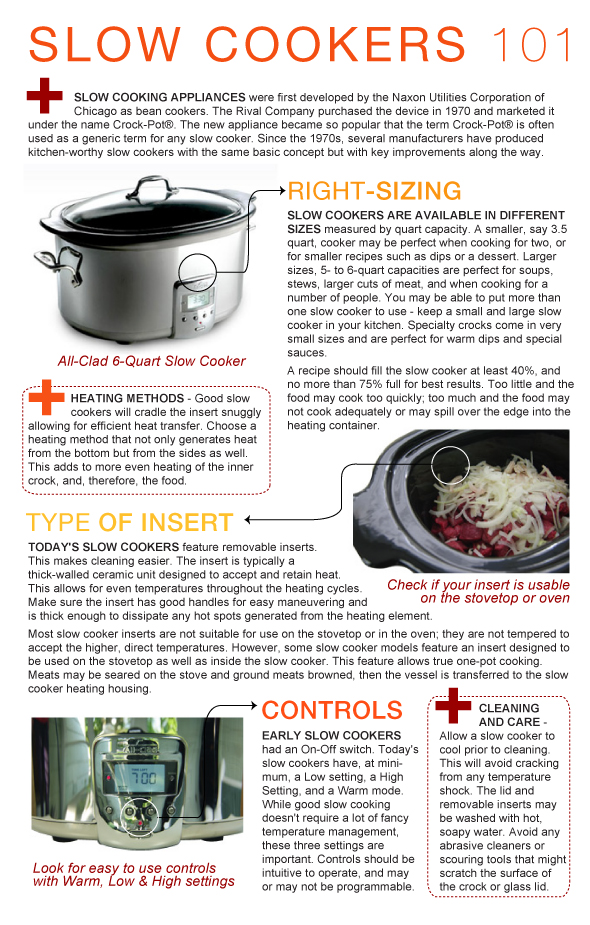
SLOW COOKERS 101
| 
|
SMART SLOW COOKING TIPS
| Tip #1: Put your slow cooker(s)
to work at holiday gatherings where oven space and stovetop space is at
premium. Plug in one or two slow cookers and assign them to key recipes.
They'll accomplish the task on the side, away from most of the kitchen
flurry.

Tip #2: A tip from our featured author: layer the ingredients in the slow
cooker as called for in the recipe. Ingredients on the bottom will
receive more heat, and ingredients on top may be useful in basting
ingredients below. A classic example of this is a pot roast with root
vegetables. The vegetables actually take longer to cook than the meat
and benefit from the meat juices.
Tip #3: Take care when doubling recipes for the slow cooker. The different
quantities will change the cooking times. In any case, do not fill the
slow cooker more than three-quarters full.
Tip #4: Brown a couple of pounds of ground meat at a time and freeze the extra
pound in a freezer-grade zipper bag. The next time you slow cook a
recipe calling for the meat, the browning step is done.
Tip #5: Never immerse the outside heating unit in water. Simply wipe up any spilled food with a paper towel or dishtowel.
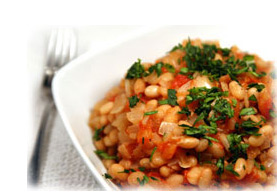 Tip #6: Most slow cooking is accomplished unattended. Liquids are condensed on
the lid and returned to the food. It's ok to lift the lid and stir once
or twice, but know that heat and steam are escaping with each peek. Tip #6: Most slow cooking is accomplished unattended. Liquids are condensed on
the lid and returned to the food. It's ok to lift the lid and stir once
or twice, but know that heat and steam are escaping with each peek.
Tip #7: Don't forget to taste
and adjust the seasonings in your slow cooked recipe. Spices and herbs
may lose their punch over the long cooking period. When cooking beans in
the slow cooker, salt only at the end. Salt toughens the skins of many
beans preventing them from becoming tender.
Tip #8: Place only thawed foods in a slow cooker. Frozen foods will suppress
the slow cooker's temperatures stalling the cooking, and perhaps making
the environment conducive to bacterial growth. Also, many inserts are
not tempered to withstand a collision of hot and cold.
|
Q & A's
|  Q: What is sous vide? Q: What is sous vide?
A: An older technique currently experiencing a revival, sous vide is another slow, low temperature cooking method. Food is placed in
airtight or vacuum-sealed plastic bags and placed in a water bath
appliance whose temperature is kept constant at a very low heat, around
140-160°F. The result is food that is quite tender and moist.
Q: How much liquid should I add? The recipes don't seem to call for enough liquid.
A: It's not unusual to think at the onset of a slow cooking recipe that
there is not enough liquid. But, slow cooking conserves moisture because
there is no evaporation or steam released. As food heats, it releases
its water; this quickly adds to the total amount of liquid. Use enough
liquid to cover, just barely, the ingredients. For best results, use a
reliable, tested recipe as a guide.
Q: A slow cooker is on for hours at a time, is it energy efficient?
A: Several factors go into determining the energy efficiency of slow
cooking. Newer models are definitely more energy efficient by design. A
slow cooker uses less energy than the stovetop or oven, but may operate
for longer periods. In actual use, a slow cooker is estimated to cost
about 2 cents an hour to operate. The one-pot nature of the slow cooker
increases the efficient use of energy.
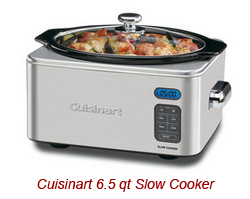 Q: How can some of my favorite recipes be adapted to the slow cooker? Q: How can some of my favorite recipes be adapted to the slow cooker?
A: Many classics have been adapted for slow cooking methods. A good slow
cooker cookbook will have tested recipes available. If you're interested
in experimenting on your own, generally decrease the amount of liquid
used by about half, or just enough liquid to cover the food. (Rice and
pasta adaptations may be the exception here; maintain standard
water-to-grain ratios). Seasonings decrease in potency in long cooking;
add a bit more, or taste and adjust at the end of cooking. |
|
COOKBOOK REVIEW
| Slow & Easy, Fast -Fix Recipes for Your Electric Slow Cooker by Natalie Haughton. Published by John Wiley & Sons, Hoboken, NJ. Copyright 2009.
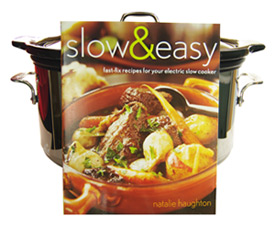 There
are many cookbooks for slow cooking on the market these days. We chose
to feature this one because it had an emphasis on the fast assembly of
ingredients. To really take everyday advantage of slow cooking, the
upfront preparation needs to be manageable in what are already very
hectic days. This book guides us in accomplishing our slow cooking
target of fast, easy, and then slow. It covers the classic slow cooker
world with one-pot meals, recipes for all kinds of meats, rich soups,
and stews. It also expands our slow cooking horizons by presenting dips,
drinks, salsas, pastas, grains, sides, ethnic flavors, and breakfast
fare. She concludes with slow cooker desserts such as cake, crème
brûlée, cheesecake, and crumbles. With this wide range of offerings, the
versatility of a slow cooker is repeatedly proven. True to its title,
recipes are assembled quickly and easily, then left for the slow cooker
to do the heavy lifting of coaxing and blending flavors. Your slow
cooker will have a permanent place on your countertop with this book
beside it. There
are many cookbooks for slow cooking on the market these days. We chose
to feature this one because it had an emphasis on the fast assembly of
ingredients. To really take everyday advantage of slow cooking, the
upfront preparation needs to be manageable in what are already very
hectic days. This book guides us in accomplishing our slow cooking
target of fast, easy, and then slow. It covers the classic slow cooker
world with one-pot meals, recipes for all kinds of meats, rich soups,
and stews. It also expands our slow cooking horizons by presenting dips,
drinks, salsas, pastas, grains, sides, ethnic flavors, and breakfast
fare. She concludes with slow cooker desserts such as cake, crème
brûlée, cheesecake, and crumbles. With this wide range of offerings, the
versatility of a slow cooker is repeatedly proven. True to its title,
recipes are assembled quickly and easily, then left for the slow cooker
to do the heavy lifting of coaxing and blending flavors. Your slow
cooker will have a permanent place on your countertop with this book
beside it.
|
THREE SLOW COOKER RECIPES
| Black Bean Soup
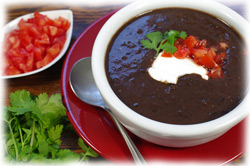 View & Print View & Print
With
ten minutes of effort in the morning, this hearty soup was ready for us
at suppertime. The slow cooker is great for cooking dried beans with no
tending of the flame, or chance for burning. The soup had deep, rich,
satisfying flavors. We topped our bowls with a dollop of sour cream and a
few dices of freshly chopped tomatoes. Hmmm, maybe a little shredded
cheese next time.
Barbecued Pulled Beef Sandwiches
 View & Print View & Print
This
recipe deliciously demonstrates another virtue of the slow cooker -
making inexpensive, tough cuts of meat succulent and tender. The aroma
that greeted us as we walked through the door that evening was
mouth-watering. The sandwiches were exactly what we thought a good
pulled beef sandwich should be. The leftovers were a pleasant redux.
Mediterranean Chicken with Artichokes,
Mushrooms, and Sun-Dried Tomatoes
 View and Print View and Print
The
slow cooker is not just for making everyday food, but is a huge boon
when entertaining. We served this recipe to company serving it over
pasta. The piquancy of the sun-dried tomatoes and the unique artichoke
flavor created a taste sensation that delighted our guests. This dish
may be cooked on high for 3 hours, or on low for 5 hours - choose what
fits your schedule.
Recipes from Slow & Easyby Natalie Haughton. Published by John Wiley & Sons, Hoboken, NJ.
Copyright 2009. Reprinted with permission of the publisher. All rights
reserved.
|
BRIDAL REGISTRY
|  8/28/10 - Susan Hoskins & Joey Maxwell 8/28/10 - Ginny Sellars & Thomas
Player 9/18/10 - Carolyn Small & Jay Haas,
Jr. 9/18/10 - Kelly Lathan & Tully
McWhirter 9/18/10 - Lauren Stone & Bradley
Hudson 9/25/10 - Allison Scanlan & Brent
Abbott 9/25/10 - Tolly Todd & Ryan Garrison 10/2/10 - Claire Anderson & Will
McCranie 10/2/10 - Claire Fisher & Parks
Alexander
10/9/10 - Anna Furman & Jeremiah Gall
10/9/10 - Stephanie Owings & William
O'Neal 10/16/10 - Candice Culbertson & Todd
Wigheld 10/16/10 - Anne Cooper Ellefson & Owen Doherty 10/16/10 - Cam
Fuller & Jeff Saltzman 10/30/10 -Lindsey Bates & Jay Motley 11/6/10 - Prentiss Counts & Brian
Shealey 11/6/10 - Anna Bell Farrar & Bert Gall 11/6/10 - Flynn Jameson & Clinton McKinney 12/4/10 - Lauren Davis & Kent Barber 12/11/10 - Alysha Southerland & Jake Van
Gieson 12/18/10 - Kendall Rice & William Bateman
1/1/11 - Kelleigh Ledbetter & Morgan Thomas
1/8/11 - Marie Long & Trevor Turner
1/8/11 - Heath Martin & Chris Beard
1/8/11 - Anne Green Taylor & Graham
Buckner
1/15/11 - Jenny Pressly & Will
Stewart 1/29/11 - Abby Dykes & John Paylor 3/12/11 - Virginia Gail Atkinson & Graham
Hardaway 3/19/10 - Lauren Jacques & Richard Cox
5/11/2011 - Marshall Turnbull & Townes Johnson
05/14/2011 - Christi Moore & Jake Stansell
05/14/2011 - Beth Sellers & Paul Landis
|
|
Take five minutes in the morning to set up your slow cooker, save hours in the evening.
Happy Cooking!

Karen, Denny, and the Entire Staff
Foxfire Gallery & Kitchen Shops
|
|
|
|
|