It's a Girl
Thing
|
 Plan a weekend or just a day with your
girlfriends in downtown Cedar Falls. The street will be alive with
fun activities and great bonuses. The first 150 registrants will
receive a shopping bag worth at least $100 in products and
promotions. Check for more details
at Cedar Falls' Community Main
Street's website.
Kitchen Essentials will be in on
the fun with some great activities, and of course, some great
bargains! We'll be having a Knife Skills
Class led by Clark Stone of Wusthof-Trident, and a Cooking
Demonstration by Fran Quinn of Karon Associates. Stay
tuned for additional
details! |
Cedar Falls
Community Main Street Salutes
|
 Cedar Falls' Community Main Street values all
those who comprise our community. We'd like to single out and
celebrate specific groups of our community each month with a
SALUTE! Cedar Falls' Community Main Street values all
those who comprise our community. We'd like to single out and
celebrate specific groups of our community each month with a
SALUTE!
Participating merchants will offer special discounts
to anyone showing their identification badge or business card during
their particular SALUTE day.
January
22: UNI Faculty and Students
February
19: Health Care Professionals
March
19: Civil & Military Service Personnel
April
16: John Deere Employees
May
21: Teachers, Educators & Support Personnel
Kitchen
Essentials will sponsor a 10% discount on SALUTE days for all
shop merchandise (Some exclusions apply. Please see store for
details). |
Adjusting How
We Cook
|
Eating at home
more these days? Whatever the reason - budgetary or dietary -
the situation results in a great opportunity to rediscover the
pleasures of good times in the kitchen and the taste of real
food.
Without getting too complex or controversial,
nutritionists' recommendations seem to unanimously point us in the
following directions: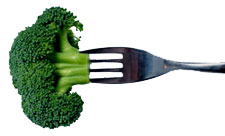
- Eat more fruits and vegetables
- Replace fatty protein with leaner sources
- Eat less saturated fat
- Consume less sugar
- Eat more whole grains
Perhaps your
health provider has added a few more bullets to this list?!
Moving toward these nutritional targets is often vexing and
guilt-ridden. However, we prefer to take the attitude of
"adventure" and "curiosity" - the very mindset that characterizes
someone interested in cooking and eating well!
Remodeling
Recipes and Menus
Whether your health strategy focuses
on trying new things or remaking old recipes more healthy, here are
some tips for remodeling some of your cooking habits:
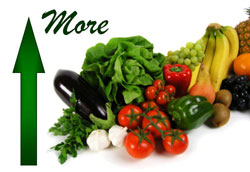 Eat more fruits and vegetables Eat more fruits and vegetables
- Try planning your menu around the vegetable first, then
determine the meat or protein source; the shift in focus mirrors
the change in nutritional emphasis
- Expand your repertoire of vegetable favorites; experiment with
one new vegetable a week; choose local, in-season foods whenever
possible to optimize cost with freshness
- Choose a serving of fruit whenever a "sweet craving" arises;
it's harder to overeat fruit than it is most snack foods
- Opt for whole fruits instead of fruit juices for an increased
sense of fullness, slower digestion, and the extra
fiber
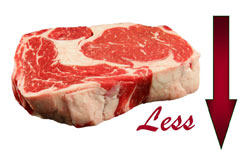 Replace fatty protein with leaner protein
sources Replace fatty protein with leaner protein
sources
- Plan at least two meals with fish each week; seafood is not
only a lean, low-calorie protein source, but has the added bonus
of protective omega-3 components
- Choose leaner cuts of beef and pork; trim excess fat
- Substitute turkey sausage for beef or pork, and save half the
fat content
 Eat less saturated fat Eat less saturated fat
- Generally, choose plant-based fats instead of animal-based
fats
- Use olive oil instead of butter wherever possible
- Use egg whites instead of whole eggs for all or part of the
eggs in a recipe
- Opt for olive oil-based salad dressings as opposed to creamy
dressings
- Choose lower fat, or reduced fat dairy products
- Cut the quantity of butter or cheese in half wherever it will
not impact the chemistry of the recipe
Consume less
sugar
 Choose fruit for snacks or dessert
instead of sugar-laden choices (1 cookie = 1 orange) Choose fruit for snacks or dessert
instead of sugar-laden choices (1 cookie = 1 orange)
- Beware of foods that have "high-fructose" sugars on the
ingredient list
- Eat the whole fruits instead of their juice counterparts or
"fake" juices
- Experiment with substituting applesauce for sugar in baking
recipes
- Eat semi-sweet or bittersweet chocolate instead of milk
chocolate
- Keep your favorite sweet indulgence part of your diet in
appropriate portions; too much perceived denial may backfire in
the long run
 Eat more whole grains Eat more whole grains
- Substitute whole wheat flour for at least half of the flour in
most recipes
- Enjoy the nutty flavor of whole grain brown rice instead of
white rice
- Get acquainted with quick-cooking whole grains, for example,
oats or quinoa
Beware of
processed foods even when they're touted as healthy or
low-calorie. A vast amount of our food choices are
manufactured, altered, or processed in ways that have become distant
from their origins and may not do us that much good. To
paraphrase Michael Pollan, author of the excellent book, "In Defense of
Food," don't eat what your grandmother wouldn't
recognize. Further, he sums up his eating advice in simple
terms: "Eat food. Not too
much. Mostly plants." Not a bad mantra! ("In Defense of Food," and Pollan's
previous book, "The Omnivore's Dilemma," are both
great "must reads" for anyone interested in
food).
|
Healthy
Cooking Methods
|
With
nutritional goals in mind, and some thoughtful food choices at hand,
how
we cook our food can promote our progress toward healthy
eating.
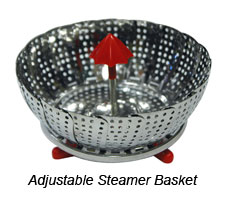
Steaming
- Cooking without oils easily shaves 100-400 calories from a
dish. Steam cooks vegetables and seafood at a rapid rate
without the loss of flavor or the dilution of nutrients that occurs
with boiling or poaching methods. The small amount of required
water heats on the stovetop quickly, while the steamer basket
supports the food above the water's boil. 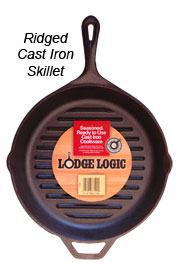 Stainless steel or silicone-based baskets are
cleverly constructed to adjustably fit to a wide variety of pot
sizes. A tight-fitting lid on a good pot completes the
steaming set-up. Stainless steel or silicone-based baskets are
cleverly constructed to adjustably fit to a wide variety of pot
sizes. A tight-fitting lid on a good pot completes the
steaming set-up.
Grilling
Pans - By design, pans with grilling ridges elevate the
cooking food, allowing any grease or oil to be drained in the pan
instead of soaked up by the finished food. Grilling pans are
great resources not only for preparing meats, but also for grilling
sandwiches and vegetables. By placing the food across the
ridge lines, there is less surface area in contact with the food
resulting in less sticking.
Nonstick
Cooking Surfaces - A nonstick pot or pan has a special
surface that resists foods from sticking, and reduces or eliminates
the need for oil as a lubricating barrier between the pan and
the cooking food. Good nonstick cookware features quality
 materials and
multiple surface layers for durability. Cookware companies have
different approaches for nonstick surfaces on their products; here
are a few brands that we recommend and carry: materials and
multiple surface layers for durability. Cookware companies have
different approaches for nonstick surfaces on their products; here
are a few brands that we recommend and carry:
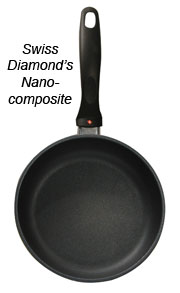
Swiss Diamond -
This brand stands alone in the nonstick world with its patented,
nano-composite, diamond-reinforced, cooking surface. The
surface will not peel, crack or blister. The magical surface
lies on a cast aluminum core. We like the perfectly flat base
that allows for efficient heat transfer on ceramic cooktops as well
as electric and gas ranges. The pans are safe with metal
utensils.
All-Clad - The
LTD series from All-Clad provides an exterior of anodized aluminum
with stainless steel handles and lids. The nonstick linings
utilize a Whitford Excalibur lining where the nonstick materials are
integrated into the pan's stainless steel surface for exceptional
durability.
Scanpan® - This
company focuses on the production of nonstick cookware with a
PFOA-Free certification. Its unique construction embeds
special, naturally nonstick compounds into the core's surface.
The outer aluminum construction is notably sturdy. The cooking
surface is safe for use with metal utensils
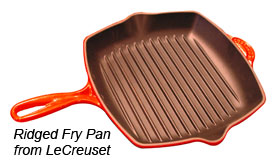 Le Creuset -
This classic cookware is naturally and safely nonstick with
its enameled cast iron or enameled steel construction. The
smooth surfaces resist sticking and are easily cleaned. Le
Creuset also features a series of fry pans with a nonstick Tri-Ply
surface layered on a stainless steel base. Le Creuset -
This classic cookware is naturally and safely nonstick with
its enameled cast iron or enameled steel construction. The
smooth surfaces resist sticking and are easily cleaned. Le
Creuset also features a series of fry pans with a nonstick Tri-Ply
surface layered on a stainless steel base.
Le Creuset's newest
line is made of forged, hard-anodized aluminum that includes an
encased magnetic stainless steel disk making it suitable for
induction cooking. This cookware comes with a 10-year
guarantee.
Chantal - The
enamel-on-steel construction that Chantal is noted for is naturally
nonstick and chemical-free. The stick resistant surface is
available throughout their line of saucepans and frying
pans.
Meyer Analon --
This gourmet cookware, known for its design, has a hard anodized
aluminum structure and Dupont's Autograph 2 nonstick surface. Pans
feature a soft, cool, SureGrip handles.
Viking - This
well-known brand offers nonstick surfaces on it series of fry
pans. The nonstick surface coating is oven safe to 500
F. Viking cookware is noted for its 7-ply construction that
conducts heat evenly and quickly.
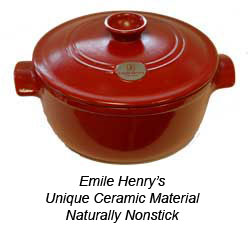
Emile Henry Ceramic
- This uniquely kilned ceramic is naturally nonstick. The
cookware moves from the refrigerator/freezer to stovetop, to the
oven, and beautifully to the table. The material does not
scratch, even when cutting, and is uniquely chip
resistant. |
By the
Numbers
|
There's a
prevalent phobia when it comes to nutritional numbers. We
rebel at the notion of "counting calories" or noting grams of this
or that. Perhaps numbers aren't "your thing," but a little
quantifiable knowledge will get you quite a ways down the road.
The Essential
Numbers - There are 3500 calories in a pound. If we eat
3500 calories of food, we add a pound of weight to our bodies.
As we live, breathe, and exercise, we use calories. The
difference is a weight loss or gain - no fancy math here!
If we eat an extra potato chip, (10 calories apiece),
each day, we will weigh one pound more at the end of the year.
If we walk one-tenth of a mile more each day, we'll weigh one less
pound at the end of the year.
Determine what your
ideal intake is at any number of websites, (CDC's site).
Then get acquainted with where your calories come from, their
nutritional quality, and what your daily equation looks like, (Calorie Count is a nice, easy-to-use, nutritional
and activity analysis website).
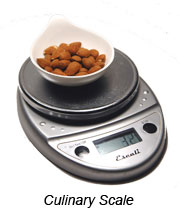 Recalibrate your Portions - We find
culinary scales extremely useful in recalibrating our portions of
food - it's our best friend, not a foe. It's amazing how the eye and
the stomach can trick the mind when estimating food
quantities. While weighing food may not be practical all of
the time, a habit of weighing food while cooking at home gives you
the necessary knowledge to make appropriate choices when away from
home. Aside from any nutritional initiatives, culinary scales
are a great way to measure and cook. Most international
cookbooks are written with ingredient quantities noted by weight in
grams, (g), instead of cups or teaspoons. Recalibrate your Portions - We find
culinary scales extremely useful in recalibrating our portions of
food - it's our best friend, not a foe. It's amazing how the eye and
the stomach can trick the mind when estimating food
quantities. While weighing food may not be practical all of
the time, a habit of weighing food while cooking at home gives you
the necessary knowledge to make appropriate choices when away from
home. Aside from any nutritional initiatives, culinary scales
are a great way to measure and cook. Most international
cookbooks are written with ingredient quantities noted by weight in
grams, (g), instead of cups or teaspoons.
As you make changes
toward your selected goal, write down your information. A
recent study published by the American Journal of Preventive
Medicine indicated that individuals who document their eating habits
doubled their weight loss and were more successful in keeping excess
weight off.
Don't Sweat
the Small Stuff - Focus your nutritional measurements where
it counts. Don't worry about being obsessed with every little
bite or pinch - focus on the bites and pinches that make a
difference - 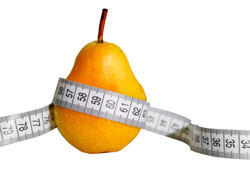 25 g of butter is a lot different than 25 g of
blueberries, measure the butter; estimate the blueberries. Spend the
time to calculate the content of a couple of your favorite recipes
that you use over and over again. Just as you would with a
financial stock, focus on the long-term trends of your
habits. 25 g of butter is a lot different than 25 g of
blueberries, measure the butter; estimate the blueberries. Spend the
time to calculate the content of a couple of your favorite recipes
that you use over and over again. Just as you would with a
financial stock, focus on the long-term trends of your
habits.
Do Everything
in Moderation - Like we haven't heard that piece of advice
before! We hear it again and again because it's true again and
again. Many of you tell us that it's possible to savor that 1
ounce of chocolate to equal satisfaction as a 2 ounce piece.
We'll let you know how that adjustment
goes!
|
Smart
Healthy Cooking Tips
|
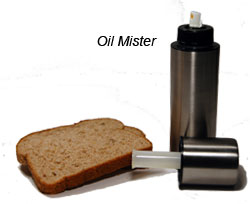 Tip #1: We've come to love
dipping bread in olive oil; try using olive oil on your morning
toast as well instead of butter. An oil mister is
perfect for applying a modest spritz on your bread in addition to
judiciously preparing a cooking pan. Tip #1: We've come to love
dipping bread in olive oil; try using olive oil on your morning
toast as well instead of butter. An oil mister is
perfect for applying a modest spritz on your bread in addition to
judiciously preparing a cooking pan.
Tip #2: Whole grains take
longer to cook, and that often deters us from using them more
frequently. Make large batches of brown rice or other whole
grains; they freeze quite well in freezer-grade zipper bags.
Reheat the grains in a steamer or a cooking pot with the addition of
a little water.
 Tip #3: Make your own tomato
sauce from a combination of crushed tomatoes and petite-diced
tomatoes; choose how much oil or salt to add. (Many jarred tomato
sauces are heavy on both). Tip #3: Make your own tomato
sauce from a combination of crushed tomatoes and petite-diced
tomatoes; choose how much oil or salt to add. (Many jarred tomato
sauces are heavy on both).
Tip #4: Instead of
"leftovers," think "beforeovers." Package or put aside
portions of your completed recipe into "to-go" containers BEFORE you serve that meal.
Processing "beforeovers" reduces the tendency to overeat, and makes
your cooking efforts doubly worthwhile and rewarding the next day or
week.
Tip #5:
Tip yourself. Every time you treat yourself to a healthy meal at
home, place the gratuity that you would have paid at a restaurant
into a jar or an account for yourself. Have fun anticipating
how your "tip jar" will be spent!
|
Q
& A's
|
 Q:
Does using a culinary scale and weighing food involve doing a lot of
math? Q:
Does using a culinary scale and weighing food involve doing a lot of
math?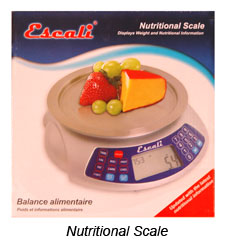
A: No. The tare
function on a culinary scale eliminates the need for calculating the
net weight of foods. Place a dish on the scale, press the tare
button to "zero out" the weight of the dish. Add an ingredient
to the desired quantity as measured by the weight. Tare the
scale, and add the next ingredient, etc. You'll quickly come
to love this method of measuring ingredients when cooking.
Q: Are there official definitions
for the health claims on food packaging?
A: According to the American
Dietary Association, there are specific qualifications that a food
must attain before claiming certain designations:
- "Free,"
(fat-free, sugar-free, etc.), is defined as an amount so small
that it would not have an effect on the body.
- "Light/Lite"
designates a food with one-third fewer calories or 50% less fat
than standard versions of the food.
- "Reduced,"
(reduced calories, reduced fat, etc.), indicates that the food has
at least 25% less than a comparable food.
- "Good
Source" means that the item has 10-19% of the recommended
daily value of the cited nutrient.
- "Healthy"
marks foods that are low in saturated and unsaturated fats and
meets specific levels of cholesterol, sodium, and other vitamins
and minerals.
Q: Where can I find the time to do healthy
cooking?
A:
"I have to hurry up and get supper ready so that I can get a little
relaxation in this evening." Make cooking a pleasurable event
and not a task. Cooking can be relaxing, an art form, and a creative
outlet that reenergizes your body and spirit. We're here to help you
develop this mindset!
|
Cookbook
Review
|
The Eating
Well® Diet by Dr. Jean Harvey-Berino, Ph.D., R.D. with Joyce
Hendley and the Editors of EatingWell. Published by Countryman
Press, Woodstock, Vermont. Copyright 2007.
The title "Eating Well" captures it all -
this book is equal parts instruction and recipes designed to equip
and empower the participant toward delicious food choices that
support a healthy eating lifestyle. The first half of the book
provides a solid foundation for understanding what healthy eating is
and its importance for each of us. Dr. Harvey-Berino proposes and
explains seven steps toward healthy 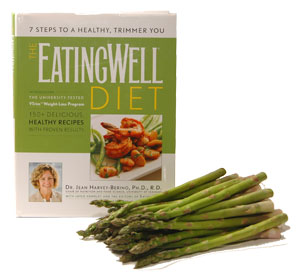 eating and turning good changes into a
permanent lifestyle of "eating well." The second part of the book
presents delicious recipes - some new, some remodeled favorites.
Each recipe is annotated with a nutritional analysis. Included
throughout the book is lavish, full-color photography - after all,
we eat first with our eyes! Informal "recipes" address healthy
snacks, healthy fast foods, and eating well on-the-run. The
recipes are derived from the kitchens of EatingWell Magazine,
"Where Good Taste Meets Good Health". The book
concludes with a generous appendix of resources, both forms for
documenting your changes and key food information for easy
referencing. Among the myriad of eating plans in the marketplace,
this one seems to be realistic, sensible, and most importantly,
doable! eating and turning good changes into a
permanent lifestyle of "eating well." The second part of the book
presents delicious recipes - some new, some remodeled favorites.
Each recipe is annotated with a nutritional analysis. Included
throughout the book is lavish, full-color photography - after all,
we eat first with our eyes! Informal "recipes" address healthy
snacks, healthy fast foods, and eating well on-the-run. The
recipes are derived from the kitchens of EatingWell Magazine,
"Where Good Taste Meets Good Health". The book
concludes with a generous appendix of resources, both forms for
documenting your changes and key food information for easy
referencing. Among the myriad of eating plans in the marketplace,
this one seems to be realistic, sensible, and most importantly,
doable!
|
Recipes
|
Excerpted from The
EatingWell Diet, © 2007 by
Eating Well, Inc., Reprinted by permission of the publisher, The
Countryman Press/W.W. Norton & Company, Inc. To order, call
1-800-245-4151 or go to www.countrymanpress.com.
Ham, Gruyère
& Spinach Bread Pudding
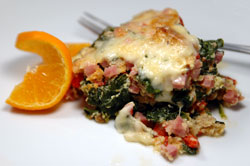 It was hard to believe that this
remodeled brunch casserole was only 276 calories per serving.
Only half of the eggs used included the yolk, a move which saved
calories and many grams of fat. The liberal use of vegetables,
the inclusion of whole wheat bread, and reserving the Gruyère cheese
for just the top, completed the makeover. The portions were
satisfying and incredibly flavorful! While rosemary provided
the dominant character to this version, a basil or an oregano
version would be equally delicious. It was hard to believe that this
remodeled brunch casserole was only 276 calories per serving.
Only half of the eggs used included the yolk, a move which saved
calories and many grams of fat. The liberal use of vegetables,
the inclusion of whole wheat bread, and reserving the Gruyère cheese
for just the top, completed the makeover. The portions were
satisfying and incredibly flavorful! While rosemary provided
the dominant character to this version, a basil or an oregano
version would be equally delicious.
Click here to view the full
recipe.
Click here for a printable version of
the recipe.
Chicken
Tortilla Soup
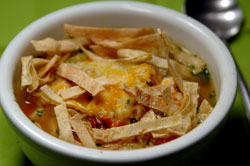
This classic soup also gets a
makeover resulting in 357 calories for a full bowl. Again,
vegetables dominate the soup's landscape, and the use of reduced fat
cheese completes the overall fat-lowering result. The liberal
use of cilantro, along with the heat of the tomatoes and chiles,
provided full, rich flavor. By using a few "semi-prepared"
ingredients, this soup went together quickly and easily.
Click
here to view the full
recipe.
Click here for a printable version of
the recipe.
Mushroom,
Sausage & Spinach Lasagna
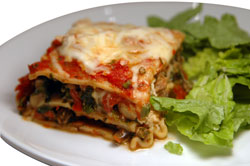 Rehabilitating lasagna into something
more healthy seems like a daunting assignment, but this variation
accomplishes the task very well at only 327 calories per
serving. The makeover starts with the inclusion of whole wheat
noodles, part-skim ricotta, and part-skim mozzarella. Generous
amounts of spinach and mushrooms disguise the modest portion of
sausage. The choice of spicy turkey sausage provided all of
expected flavor with only half of the fat of traditional
sausages. Our test kitchen gave it a big "two thumbs
up!" Mission accomplished! Rehabilitating lasagna into something
more healthy seems like a daunting assignment, but this variation
accomplishes the task very well at only 327 calories per
serving. The makeover starts with the inclusion of whole wheat
noodles, part-skim ricotta, and part-skim mozzarella. Generous
amounts of spinach and mushrooms disguise the modest portion of
sausage. The choice of spicy turkey sausage provided all of
expected flavor with only half of the fat of traditional
sausages. Our test kitchen gave it a big "two thumbs
up!" Mission accomplished!
Click here to view the full
recipe.
Click here for a printable version of
the recipe.
| |



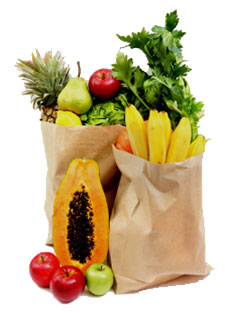 this New Year, we'll add our two cents worth
now. We're not nutritionists, nor do we pretend to be, but we
do know a little something about cooking! In this issue, we'll offer
some tricks for creating nutritional success, propose some ways to
enjoy healthy everyday cooking, and present three "remodeled"
recipes - one for breakfast, one for lunch, and another for
dinner.
this New Year, we'll add our two cents worth
now. We're not nutritionists, nor do we pretend to be, but we
do know a little something about cooking! In this issue, we'll offer
some tricks for creating nutritional success, propose some ways to
enjoy healthy everyday cooking, and present three "remodeled"
recipes - one for breakfast, one for lunch, and another for
dinner.