Classes and
Events at the Collage
|
Friday,
June 5th - "Rep" Day -
Our best reps will be here to demo a variety of different products
and answer questions.Fran Quinn from
Chantal, Prodyne, RSVP, Viking, and Our #1, Go-To-Gadget Resource,
Harold. She will answer your questions and we will be
demo-ing product from each of thsoe vendors. Dave Bois, owner of
Heartland Bakeware, will be on hand with the newest 9" x 13",
double-walled, covered cake pan on the market -- it's
revolutionary! Clark Stone, from
Wusthof Cutlery, will also be here with Specials on selected
knives. Watch for more information to come in the next
e-newsletter!
Saturday,
June 6th - Knife Sharpening
Day - 10:00am - 1:00pm. Get your edge back! Clark Stone
from Wusthof will be at the Collage professionally sharpening your
knives. Bring up to five knives and have them sharpened for a $3
donation for each knife. The $3 will be donated to the Food Pantry.
Kitchen Collage will match all donations. You can't go wrong with
this event!

Sunday,
June
7th - Flower Power
Weekend in the East Village - East Locust Street, between 4th
and 5th, will be in bloom with a special, fresh
flower market! This event, co-sponsored by the Des Moines Botanical
Center will bring all kinds of color into your life! During this
European-Style Flower Market there will be floral demonstrations,
cut flowers available for purchase, plants for
your garden, and much more! Many East Village retailers and
restaurants will be open for business during
this special event! Kitchen Collage will
be open that day from 11am -
3pm. Stop in and say hello!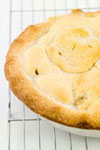
Saturday,
June 20th - Fresh Berry
Pies - 9:00am -
11:00am. This Saturday class will be taught by Blue Ribbon
winner, Lana Ross. Lana will be sharing her tricks, tips, and
techniques for making fresh berry pies. The berries will be fresh
from the Farmer's Market. You'll learn how to achieve the perfect
pie crust and how to get the filling to set up perfectly! Class Fee:
$50. Call
(515) 270-8202 to reserve your place for this
class! |
Shapes and
Sauces
|
|
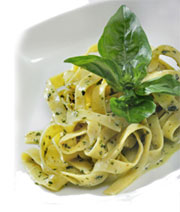 There was
a time when local choices for dried pasta were limited to
elbows, shells, flat noodles, or spaghetti. Their sauces were
limited to cheese, a white sauce, or tomato sauce
respectively. While there is nothing wrong with these
long-standing traditions, the options for other pasta dishes
are virtually limitless, and now, readily
accessible! There was
a time when local choices for dried pasta were limited to
elbows, shells, flat noodles, or spaghetti. Their sauces were
limited to cheese, a white sauce, or tomato sauce
respectively. While there is nothing wrong with these
long-standing traditions, the options for other pasta dishes
are virtually limitless, and now, readily
accessible!
Ingredients
Make the Pasta - Great pasta is made from hard wheat,
in particular, semolina flour. The inherent high-gluten,
high-protein qualities of semolina lend pasta many of its key
characteristics. Semolina has a 14% protein content compared
with bread flour that has a 12% protein complement. The higher
protein content allows the pasta to retain its shape better as
it is being formed. With less starch, the semolina-based pasta
absorbs less water which further adds to shape retention once
cooked. Pasta dough, in its most basic form, is semolina wheat
flour and water, with an egg or other liquid occasionally
substituted for the water. The pasta is kneaded, left to rest,
then formed into the desired shape. 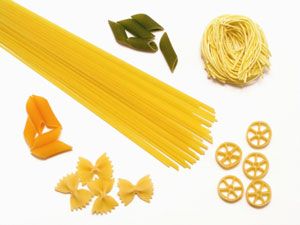 Commercially
made pastas are dried anywhere from 4 to 48 hours under low
heat. The drying stops any enzymatic activity and sets the
stage for an indefinite shelf life. Check the ingredients
listing for "semolina flour" before purchasing any packaged
pasta. Experiment with different brands of dried pasta -
you'll be amazed at the differences. Commercially
made pastas are dried anywhere from 4 to 48 hours under low
heat. The drying stops any enzymatic activity and sets the
stage for an indefinite shelf life. Check the ingredients
listing for "semolina flour" before purchasing any packaged
pasta. Experiment with different brands of dried pasta -
you'll be amazed at the differences.
Forming Pasta Shapes -
Ranging from anellini to ziti, there are hundreds of pasta
shapes to be had. Different pasta shapes derive from centuries
of tradition and the development of regional Italian
specialties. (Check out the illustrated glossary of pasta
shapes at the National Pasta Association's website). Flat
shapes are developed from pasta dough that has been carefully
rolled into sheets that become thinner with each subsequent
rolling. Round shapes such as spaghetti, capellini, and
spaghettini, are extruded by pressing the dough through a
plate with holes. Tube-shaped pastas such as bucatelli,
elbows, or penne, are also extruded in a similar
fashion. 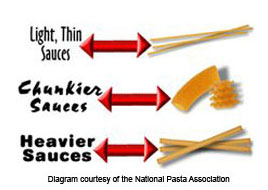 Brass
extrusion plates will leave a rougher surface on the pasta,
(excellent for grabbing sauces); as compared with non-stick
plates that leave a smooth, slightly glossy surface on the
pasta. Brass
extrusion plates will leave a rougher surface on the pasta,
(excellent for grabbing sauces); as compared with non-stick
plates that leave a smooth, slightly glossy surface on the
pasta.
Complement
Shapes and Sauces - A great pasta dish starts by
choosing a shape and sauce that complement each other.
According to the National Pasta Association, thin, delicate
pastas should be paired with light, thin sauces. Heavier
sauces require a thicker pasta shape. Chunky sauces prefer
shapes with a 3-dimensional character that provide a surface
and gaps in the structure for capturing the
sauce.
| |
Cooking
Perfect Pasta
|
|
Dried or
fresh pasta hold equal stature on the quality and enjoyment
scale. The choice is guided by the desired dish and the whim
of the day. To cook perfect pasta follow a few key rules - the
results will reward you well!
 The
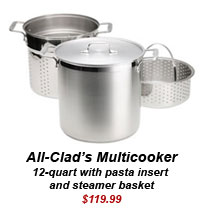
Water - Use a large pot with lots of water to
cook pasta. More specifically, for one pound of pasta
use an 8 quart pot with 5-6 quarts of water. Heat the water to
a rolling boil. The large amount of water achieves two goals:
(1) a large mass of water will return to boiling quickly and
not be cooled by the added pasta, and (2) a rolling boil keeps
the water and the pasta moving during cooking thus preventing
sticking. The
Water - Use a large pot with lots of water to
cook pasta. More specifically, for one pound of pasta
use an 8 quart pot with 5-6 quarts of water. Heat the water to
a rolling boil. The large amount of water achieves two goals:
(1) a large mass of water will return to boiling quickly and
not be cooled by the added pasta, and (2) a rolling boil keeps
the water and the pasta moving during cooking thus preventing
sticking.
The
Salt - Salt the cooking water generously.
Traditionalists say "taste the water - it should taste like
the sea." If it's been some time since you've tasted the sea,
plan to use about 2 tablespoons of salt for 6 quarts of water
when making 1 pound of pasta. Most experts will recommend
using kosher salt, sea salt, or any plain salt without
additives, that is, without iodine or anti-caking agents. The
water may be salted before or after boiling, just make sure
it's there before the pasta is added!
Measuring Quantities of Pasta
- The endlessly unique shapes of pasta don't lend themselves
to measuring cooking quantities by volume. The best way to
measure dry pasta is by weight; a kitchen scale is invaluable
in determining cooking quantities. Nutritionally, a serving is
defined as 2 ounces. We usually plan on 4 ounces of pasta per
person.
 Cooking
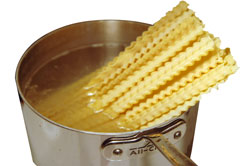
the Pasta - Add all of the pasta at once to the
boiling, salted water. Initially stir the pasta in the water,
then periodically as the pasta cooks. This will keep the pasta
from sticking together as the surfaces become rehydrated. Use
a lid on the pot to return the water to a rolling boil, then
leave the pot uncovered once the boiling point has been
achieved once again. Cooking
the Pasta - Add all of the pasta at once to the
boiling, salted water. Initially stir the pasta in the water,
then periodically as the pasta cooks. This will keep the pasta
from sticking together as the surfaces become rehydrated. Use
a lid on the pot to return the water to a rolling boil, then
leave the pot uncovered once the boiling point has been
achieved once again.
The Timing - Fresh pasta is
cooked in 1-2 minutes. Cooking times for dried pasta will vary
according to their shape, quantity of water, boiling
temperature, and even by brand of pasta. The pasta's packaging
will often offer suggested cooking times. Use this as only a
sug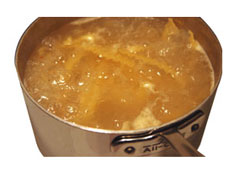 gestion.
As you periodically stir the pasta, check for doneness by
removing a piece and biting into it. You're probably familiar
with the term "al dente" which directly translated means "to
the tooth." The cooked pasta should be tender to the bite, yet
firm. The al dente point is achieved just when the pasta is
done in its center, not a minute longer. Pasta that's
cooked too long will be a mushy mess. gestion.
As you periodically stir the pasta, check for doneness by
removing a piece and biting into it. You're probably familiar
with the term "al dente" which directly translated means "to
the tooth." The cooked pasta should be tender to the bite, yet
firm. The al dente point is achieved just when the pasta is
done in its center, not a minute longer. Pasta that's
cooked too long will be a mushy mess.
The Finishing - Reserve 1 cup
of pasta water before draining the pasta. Remove
delicate pasta shapes with a pasta spoon or a mesh skimmer.
Drain sturdy pasta either by lifting the cooking basket from
the pot, or by pouring the pot's contents into a colander.
Don't rinse your pasta after cooking unless it's destined for
a cold salad. Unrinsed pasta will retain more of its nutrients
and allow the sauce to cling better to its surfaces. Neither
should you add oil to the pasta at this point to keep it from
sticking. Oiling will keep the pasta from sticking to itself,
but it will also keep the sauce from adhering to the pasta.
Add sauce to the cooked pasta using the reserved cooking
water, if necessary, to thin it.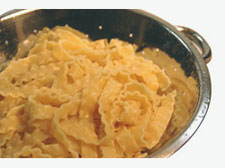
The Serving - Spring and
summer pastas may be served hot, warm, or cold - they're quite
accommodating! Pasta by nature is bland and craves strong
flavors. The cooler the temperature at which the pasta is to
be served, the stronger the sauce needs to be. Pasta may be
served family style or plated in pasta plates. Pasta
plates are large shallow bowls that organize the sauce
appropriately while providing easy access for the deployment
of the pasta spoon and a twirling
fork.
| |
Pasta
Partners
|
There are few
foods that always seem to show up when pasta appears on the
table! Through years of refinement, these pasta partners are a
classic part of the traditional and contemporary
experience.
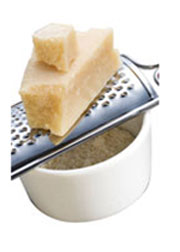 Cheese
- A shower of grated cheese atop a plate of pasta is
the cue to pick up your fork and begin eating. But first, back to
the cheese. Hard cheeses such as Parmigiano-Reggiano or an aged
Pecorino Romano complement many pasta dishes perfectly. Always
keep a chunk of one of these cheeses in your refrigerator, (they
keep very well), and grate it as needed. For grating, choose your
tool according to the desired outcome. There are some great
new tools for grating cheeses: Cheese
- A shower of grated cheese atop a plate of pasta is
the cue to pick up your fork and begin eating. But first, back to
the cheese. Hard cheeses such as Parmigiano-Reggiano or an aged
Pecorino Romano complement many pasta dishes perfectly. Always
keep a chunk of one of these cheeses in your refrigerator, (they
keep very well), and grate it as needed. For grating, choose your
tool according to the desired outcome. There are some great
new tools for grating cheeses:
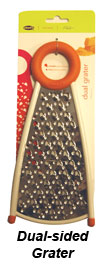
Graters - with
traditional cutting edges, graters come in different sizes to
produce the coarseness or fineness of shredded cheese desired.
A box grater has multiple sides each with its own talent. We
like some of the newer graters with silicone-covered "feet" that
protect the working surface.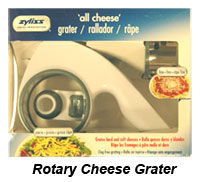
Rotary graters - with this style of
grater, a crank turns a drum with cutting edges across a chunk of
cheese. The grated cheese falls from the inside of the drum
directly on the pasta entrée.
Planes - It's hard to imagine life
before Microplanes. As with other grating tools, Microplanes come in
a variety of grating sizes. Microplanes are easy to handle and
may be scraped across the food, or the food scraped against the
tool. They are indispensable for not only cheese, but for zesting
citrus and so much more.
 Parmesan
Rasps - These tools are designed specifically for hard
cheese and result in a very fine grate. Parmesan
Rasps - These tools are designed specifically for hard
cheese and result in a very fine grate.
Olive Oil - Pasta demands your best
quality olive oil - it will show very well. Always choose Extra
Virgin Olive Oil for 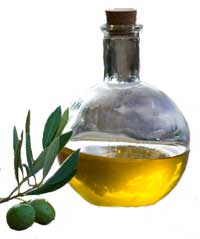 use
in pasta sauces. The fruitiness of the olive oil will blossom in the
heat of the pasta producing a delightful fragrance and rich taste. use
in pasta sauces. The fruitiness of the olive oil will blossom in the
heat of the pasta producing a delightful fragrance and rich taste.
Fresh Herbs - Spring
and summer offer fresh herbs in abundance. Start with whichever herb
is in season and develop your signature pasta dish from there. Fresh
herbs may be used generously; their potency is much less than dried
herbs. It's not too late to plant some herbs for late summer
enjoyment. Pick the herbs as the water comes to a boil for ultimate
freshness.
|
Smart Pasta
Tips
|
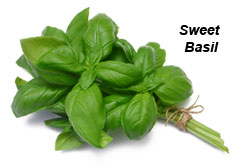 Tip #1: Add fresh herbs to
the pasta dish just after draining the pasta while it is still hot.
The heat will bloom the fragrant oils in the herbs allowing their
best side to appear. Tip #1: Add fresh herbs to
the pasta dish just after draining the pasta while it is still hot.
The heat will bloom the fragrant oils in the herbs allowing their
best side to appear.
Tip
#2: For cold pasta salads, avoid using butter in your
recipes - stick with a high quality olive oil. The chill will
congeal the butter in awkward places and produce a disconcerting
appearance and mouth feel. The olive oil will help keep the pasta
from sticking together even at the cooler temperatures.
Tip #3: Dried pastas should
be stored in a dark location. The vitamins that fortify the pasta
are light sensitive. Generally, boxed pasta may be stored
indefinitely, but plan to use within a year.
Tip #4: Include a bit of fat
and some protein in your pasta complements. This will help balance
the body's response to the pasta's carbohydrates and moderate the
blood-sugar levels.
Tip
#5: In a hurry? Choose a capellini or another
thin-stranded pasta. It cooks in one to two minutes and is
ready for a light sauce. Improvise the sauce with some great gourmet
sauces. Some choices perhaps originally intended for
bruschetta or dips, double as great pasta sauces.
Tip #6: Have some fun with a
child this summer and renew the craft of macaroni necklaces by using
some of the fun, new, pasta shapes for painting, dyeing, and
stringing into a delightful "accessory" or two.
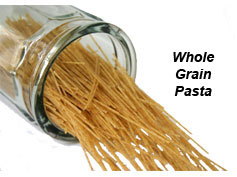
Tip #7: Manufactures of whole
grain pastas have been busy perfecting these healthy choices. If
it's been a while since you've tried whole grain pasta, it may be
time to try it again, they've
improved.
|
Summer Pasta
Recipes
|
Excerpted from Four
Seasons Pasta by Janet
Fletcher. Copyright 2004. Used with permission of Chronicle Books,
San Francisco, CA. All rights reserved.
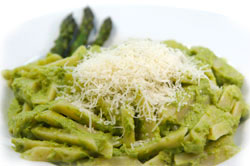 Penne
with Creamy Sicilian Asparagus Sauce Penne
with Creamy Sicilian Asparagus Sauce
This pasta
and sauce took us by surprise. It was deceptively simple to make and
tasted like some chef's exquisite creation. The bright spring green
of the sauce was a feast for the eyes as well as the palate.
We think there are additional possibilities for adapting this sauce
to whatever vegetables are bountiful at the moment.
Click here to view the complete
recipe.
Click here for a printable version of
the recipe.
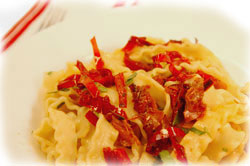 Dried
Ribbon Pasta with Red Bell Peppers and
Prosciutto Dried
Ribbon Pasta with Red Bell Peppers and
Prosciutto
Red bell peppers have a sweetness in
summer that surpasses their green or yellow cousins. The red peppers
sauté gently forming a rich medley with the garlic and olive
oil. A bit of prosciutto adds savory richness. The dish comes
together with long, ruffled ribbons of mafaldine and flecks of fresh
parsley. We were hoping for leftovers, but there were none to be
had!
Click here to view the complete
recipe.
Click here for a printable version of
the recipe.
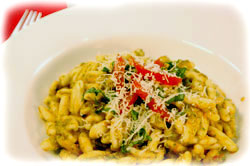 Pasta
with a Pesto of Almonds, Tomatoes, Capers, Anchovies, Garlic, and
Salt Pasta
with a Pesto of Almonds, Tomatoes, Capers, Anchovies, Garlic, and
Salt
This riff on a traditional pesto produced
surprisingly different results. The sauce incorporates the classic
flavors of basil and garlic, then takes a different turn with red,
ripe tomatoes, almonds, a hint of mint, and some strong pecorino
cheese. There's nothing shy about this pesto! We think you'll
love it!
Click here to view the complete
recipe.
Click here for a printable version of
the recipe.
| |



 directly
from the garden or farmer's market - fresh herbs, sun-warmed
tomatoes, and a host of other possibilities. During this time of
year, pasta becomes a canvas for bright colors and tantalizing
tastes. Served hot, warm, or cold, pasta's versatility matches
summer's easy-going schedule. In this issue, we'll encourage you to
experiment with some new shapes and sauces, train you on cooking
perfect pasta, and review some common foods that always seem to
partner well with a good pasta dish. We conclude with three
scrumptious, easy recipes for summertime pasta that will rival your
favorite restaurant's pasta entrees for taste, appearance, and
enjoyment!
directly
from the garden or farmer's market - fresh herbs, sun-warmed
tomatoes, and a host of other possibilities. During this time of
year, pasta becomes a canvas for bright colors and tantalizing
tastes. Served hot, warm, or cold, pasta's versatility matches
summer's easy-going schedule. In this issue, we'll encourage you to
experiment with some new shapes and sauces, train you on cooking
perfect pasta, and review some common foods that always seem to
partner well with a good pasta dish. We conclude with three
scrumptious, easy recipes for summertime pasta that will rival your
favorite restaurant's pasta entrees for taste, appearance, and
enjoyment! 
 It's
time to think about
It's
time to think about 
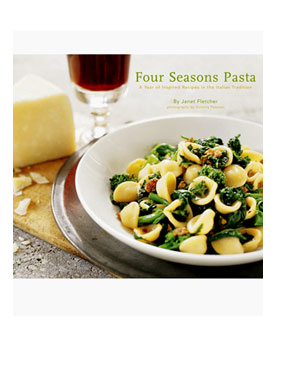 The
author combines the best of seasonal eating with all types of pasta,
(which is always in season!). Recipes are placed in an Italian
context with enchanting stories of the recipes' origins - Sicily,
Tuscany, and all environs in between. We tried several of the
recipes each with such success that we were eager to try several
more. Each of our kitchen excursions with this book in hand felt
like a visit to our favorite trattoria. We loved the overall
simplicity of the recipes and marveled at the explosion of flavors
that could be had with such naturalness. The book's close-up
photography by Victoria Pearson enticed our palate and drove us to
the market for the necessary ingredients. Fletcher comes by her
success with solid credentials. Trained at the Culinary Institute of
America and
The
author combines the best of seasonal eating with all types of pasta,
(which is always in season!). Recipes are placed in an Italian
context with enchanting stories of the recipes' origins - Sicily,
Tuscany, and all environs in between. We tried several of the
recipes each with such success that we were eager to try several
more. Each of our kitchen excursions with this book in hand felt
like a visit to our favorite trattoria. We loved the overall
simplicity of the recipes and marveled at the explosion of flavors
that could be had with such naturalness. The book's close-up
photography by Victoria Pearson enticed our palate and drove us to
the market for the necessary ingredients. Fletcher comes by her
success with solid credentials. Trained at the Culinary Institute of
America and