KitchenArt's
Spring Cooking Class Registration Open!
|
The Spring 2009
Season of Cooking Classes at
KitchenArt has launched! Seats are still available in
the following classes: 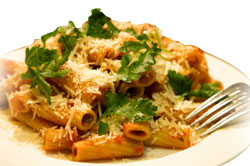 Wednesday,
15 April 2009 6:30pm - Italian Comfort Foods to Soothe the
Taxman Effect Wednesday,
15 April 2009 6:30pm - Italian Comfort Foods to Soothe the
Taxman EffectChef Judith Fertig celebrates the passing of
another income tax filing date with comfort foods from an Italian
kitchen. Saturday, 25 April
2009 7:45am - Chicago Ethnic Markets Culinary Tour
XVIIIJoin the KitchenArt staff as we explore culinary
markets in Chicago. Planned stops include a wholesale fish
market, Chinatown; Old Town, and Clybourn Corridor
District. Thursday, 30 April
2009 6:30pm - Go Bananas!Chef George Geary
goes "ape" over desserts featuring bananas. Only 1 seat
left! Friday, 1 May
2009 6:30pm - It's All about the
ChocolateChocoholic and Chef George Geary amazes all with
his unending repertoire of chocolate desserts. Only 1 seat
left!  Tuesday, 5 May 2009 6:30pm
- Meringues: Whipping the Egg
White Tuesday, 5 May 2009 6:30pm
- Meringues: Whipping the Egg
WhiteLight and airy desserts are the hallmark of this class
taught by former Disneyland Executive Pastry Chef George
Geary. Tuesday, 2 June
2009 6:30pm - A Soiree with a Snacking
AttitudeChef Christopher Lee prepares easy-to-eat,
bite-sized taste explosions for your summer
celebrations. Wednesday, 24
June 2009 6:30pm - Around the World BarbecueJoin
the BBQ Queens as they take you on a culinary tour of the grilling
world. Only 1 seat left! Find out more information about
these classes with this Link to the Class
Schedule.
Then Register online
through this link. These seats will go quickly, so register as soon
as possible. |
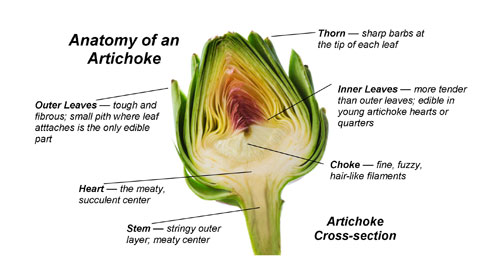
Anatomy of an
Artichoke
|
 A
staple ingredient of Mediterranean cuisine, nearly all American
artichokes are grown within a fifteen mile radius of Castroville,
California, the "Artichoke Capital of the World." Located south of
San Francisco in the Salinas Valley, Castroville has built it's
identity around the artichoke in creative ways; you can join the 50th Annual Artichoke Festival this
year on May 16 - 17, 2009. A
staple ingredient of Mediterranean cuisine, nearly all American
artichokes are grown within a fifteen mile radius of Castroville,
California, the "Artichoke Capital of the World." Located south of
San Francisco in the Salinas Valley, Castroville has built it's
identity around the artichoke in creative ways; you can join the 50th Annual Artichoke Festival this
year on May 16 - 17, 2009.
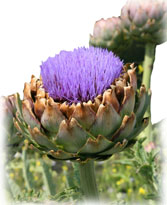
Understanding the structure and
components of an artichoke is the first step to reaping their
enjoyment. An artichoke is the flower bud of a perennial thistle
plant. Strong stems support the formation of several flower
buds per plant early each spring. A second, smaller harvest occurs
in the fall. Newer, annual varieties have recently spawned a
year-round artichoke crop. If left unharvested, the artichoke would
turn into a large, violet-blue thistle flower. But, before the bud
opens to flower, the artichoke is plucked for the kitchen.
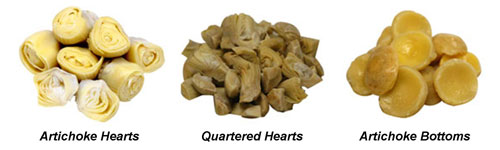
The
artichoke harvest furnishes fresh artichokes for the produce market
and plenty of artichokes for canning and freezing. Processed
artichokes, available all year-round, show up as whole hearts,
quartered hearts, or as artichoke bottoms.
At
just 25 calories per whole, large artichoke, they are nutritional
dynamos! Artichokes have the USDA's "superfood" status; they
rank seventh out of 1000 common foods for their
total-antioxidant-capacity-per-serving. |
How to
Prepare and Eat an Artichoke
|
Wrangling a
fresh artichoke can be a bit intimidating, but after one encounter
you'll be an expert!
 Choosing a
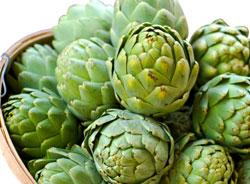
Fresh Artichoke - Choose an artichoke that is fresh in
appearance and feels heavy for its size. Minor brown or white
spots on the outer leaves are inconsequential, but the artichokes
should not appear dehydrated. A really fresh artichoke will
have "squeaky leaves" when rolled between your hands.
Artichokes come in various sizes: Jumbo (softball-size), Large
(baseball-size), Medium (tennis ball-size), and Baby (golf
ball-size). Once purchased, store them in an airtight plastic
bag in your refrigerator's vegetable section. Choosing a
Fresh Artichoke - Choose an artichoke that is fresh in
appearance and feels heavy for its size. Minor brown or white
spots on the outer leaves are inconsequential, but the artichokes
should not appear dehydrated. A really fresh artichoke will
have "squeaky leaves" when rolled between your hands.
Artichokes come in various sizes: Jumbo (softball-size), Large
(baseball-size), Medium (tennis ball-size), and Baby (golf
ball-size). Once purchased, store them in an airtight plastic
bag in your refrigerator's vegetable section.
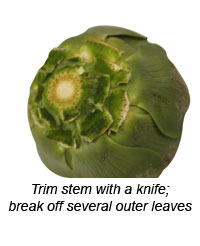
Preparing a
Whole Artichoke for Cooking - Cut the stem of a jumbo or
large artichoke to about 1-inch in length, or flush with its bottom
if your final presentation calls for an "upright or standing"
artichoke. Remove the small leaves along the stem and a few of
the outermost leaves by snapping them off at the base. Using a
serrated knife, cut the top of the artichoke away. Trim the
tips of the remaining leaves with kitchen shears to remove the sharp
thorns. Rub the cut edges of the artichoke with lemon, or
immerse the entire artichoke in a bath of acidulated water. View a
video.
 Cooking
an Artichoke - Large or jumbo artichokes may be
prepared in a variety of methods: Cooking
an Artichoke - Large or jumbo artichokes may be
prepared in a variety of methods:
Steaming -
using a steamer basket in a large pot, place the artichokes
stem-side down beside each other. Steam for 30 to 50 minutes;
adjust the time according to the size and number of
artichokes. Check the water level periodically to ensure
enough steam and to avoid a dry pot. Insert the tip of a knife into
the thickest portion of the heart to test for doneness. Boiling - place
prepped artichokes in a pot of boiling, salted water for 25 to 40
minutes or until tender. Adjust time according to the size and
quantity of the artichokes. Microwaving -
using a microwave safe bowl, place the artichokes in 1-2 inches of
water. Cover with a plate or vented plastic wrap. For
jumbo artichokes, cook on high for 12-15 minutes; for medium-sized
artichokes, 7-10 minutes. 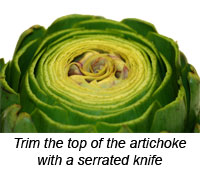 Grilling Grilling - to
grill artichokes, boil, microwave, or steam the artichokes
first. Halve the artichokes; brush the cooked artichokes with
olive oil, and place on the grill, turning at least once.
Grill until nicely browned and suitably branded with grill
marks. Roasting - to
roast artichokes, boil, microwave, or steam the artichokes until not
quite tender -- 10 minutes shy of doneness. Drain, brush with
olive oil and bake in a hot oven (400-425° F) for 10-20
minutes, or until tender and lightly browned.
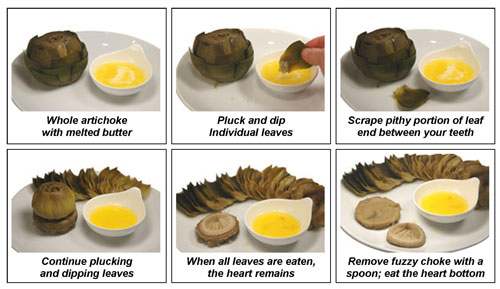
How to Eat
a Fresh, Whole Artichoke - For such a large vegetable, only a
small portion of the artichoke is edible: the heart, the
inside of the stem, and the small pithy portion of each leaf that
attaches to the heart. Serve one whole artichoke per
person.
Accompaniments
for Artichokes - As a native of the Mediterranean, the
artichoke blends perfectly with other flavors of the region. And, if
there's an arranged marriage to be made with an artichoke, it's with
the lemon. Begin with using a lemon to rub the cut edges of the
artichoke to decrease any browning. Artichokes may be boiled
in water with lemon added, or for added flavor, boil artichokes in
broth. Serve whole artichokes with individual side dishes of
sauce for dipping. Some of our favorite sauces include
Hollandaise, Creamy Garlic, Greek Style dressings, melted butter, or
even mayonnaise-based sauces. |
Spring Vegetable
Prep
|
One of the best
parts of spring is the reintroduction of the season's produce.
Along with asparagus, spring onions, and tender greens, artichokes
prognosticate the summer bounty ahead. Dazzled by their reappearance
and fresh colors, we renew our vow to "eat more veggies!" Gear
up for the season with tools that will make vegetable preparation
easy and quick.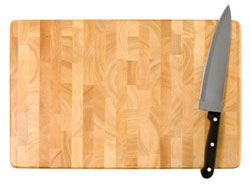
Cutting Boards - An abundance of
cutting board styles and sizes are available for the
garden-conscious kitchen. A basic kitchen will have multiple cutting
boards available for different preparation steps. Keep at least one
board exclusively for onion and garlic prep. A small 5 x
8" board works well for small jobs, and a larger 10 x 14
handles most other tasks. Wood, bamboo, and plastic composite are
the most commonly available material choices for cutting
boards.
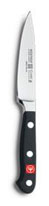 Knives
- Sharp knives in a size and shape suited to the task are a
necessity. For most vegetable prep, a 4-inch paring knife is
an all-around tool - large enough to handle the task, yet small
enough for dexterity and finessing. We also recommend a
serrated vegetable knife that you'll find indispensable for cutting
tomatoes, stone fruits and much more. Knives with a ceramic
blade eliminate the oxidizing/browning reaction incited by a metal
blade. A plastic lettuce knife makes quick work of green,
leafy bunches. Knives
- Sharp knives in a size and shape suited to the task are a
necessity. For most vegetable prep, a 4-inch paring knife is
an all-around tool - large enough to handle the task, yet small
enough for dexterity and finessing. We also recommend a
serrated vegetable knife that you'll find indispensable for cutting
tomatoes, stone fruits and much more. Knives with a ceramic
blade eliminate the oxidizing/browning reaction incited by a metal
blade. A plastic lettuce knife makes quick work of green,
leafy bunches.
 Kitchen
Shears - A pair of scissors kept handy in your knife
block simplifies so many things in the kitchen. The thorny
tips of artichoke leaves are easily snipped, grape bunches
portioned, chickens parsed, twine cut to size, and so much
more. Make sure your kitchen shears come apart for easy,
thorough cleaning. Kitchen
Shears - A pair of scissors kept handy in your knife
block simplifies so many things in the kitchen. The thorny
tips of artichoke leaves are easily snipped, grape bunches
portioned, chickens parsed, twine cut to size, and so much
more. Make sure your kitchen shears come apart for easy,
thorough cleaning.
Brushes
& Peelers - Vegetables from the garden often require a
good scrubbing. Choose from handy palm brushes or brushes with
handles. Chose sturdy bristles for root vegetables, and soft
bristles for delicate foods such as mushrooms. Peelers also
come with multiple options. 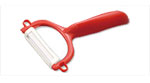 Most
individuals find a peeler with a double cutting edge the most
valuable. Like knives, a ceramic blade will keep the vegetable
and metal from reacting and turning the vegetable
brown. Most
individuals find a peeler with a double cutting edge the most
valuable. Like knives, a ceramic blade will keep the vegetable
and metal from reacting and turning the vegetable
brown.
 Colanders
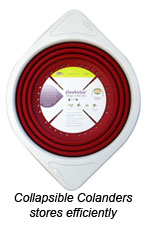
& Spinners - Rinsing and draining vegetables is
facilitated by a colander. Many have discovered the collapsible
colander that adjusts to fit across your kitchen sink, then flattens
for easy storage. Salad spinners yield crisp, freshly dried greens
that will eagerly accept your freshly-made dressing. Colanders
& Spinners - Rinsing and draining vegetables is
facilitated by a colander. Many have discovered the collapsible
colander that adjusts to fit across your kitchen sink, then flattens
for easy storage. Salad spinners yield crisp, freshly dried greens
that will eagerly accept your freshly-made dressing.
Steamers - Hands-down, the best way
to preserve the nutritional value of vegetables is to steam
them. 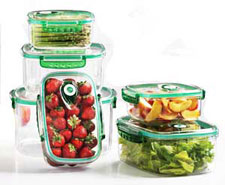 Steam
cooks at a higher temperature than boiling water while not diluting
the food's nutrients. Choose from silicone steaming baskets,
or adjustable metal steamers. Steam
cooks at a higher temperature than boiling water while not diluting
the food's nutrients. Choose from silicone steaming baskets,
or adjustable metal steamers.
Storage Containers - Keep your
produce fresh and maximize its shelf life with vacuum-style
containers. Place freshly purchased vegetables in these
containers and extend their usability by several days. Or, try
"green bags" that absorb decay-provoking gases and allow your
produce to remain fresher longer. |
| Smart
Artichoke Tips |
Tip #1: Try one of our
favorite dips, the "C3." C3 stands for "a Cup, a Cup, and a
Can." Mix a cup of mayonnaise, a cup of finely shredded
Parmesan cheese, and o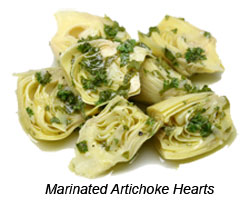 ne
can of finely chopped artichoke hearts. Place in a small
baking or soufflé dish, and bake at 350° F for 1 hour or until the
top is just lightly browned. Serve warm with your favorite
crackers or thin slices of baguette. ne
can of finely chopped artichoke hearts. Place in a small
baking or soufflé dish, and bake at 350° F for 1 hour or until the
top is just lightly browned. Serve warm with your favorite
crackers or thin slices of baguette.
Tip #2: Marinated artichoke
hearts are a popular year-round way to enjoy artichokes.
Use marinated artichoke hearts on salad, pizza, pasta, or a pan of
grilled vegetable. Save the oil from the packed artichokes for
use in salad dressings or other vegetable preparations.
Tip #3: If your artichoke
comes with a long stem, trim off the first half inch and
discard. Make a second cut to leave the artichoke with a
1-inch stem, or nearly flush with the bottom of the artichoke if you
intend to "stand" your artichoke when serving. Keep and cook
the extra stem pieces along with the artichokes and enjoy the stem's
center as a "cook's treat!"
 Tip #4: Artichokes are a
great "do-ahead" dish. Artichokes may be steamed or boiled a
day ahead of time, then successfully reheated whether serving whole,
grilled, or roasted. Drain the cooked artichokes, set
upside-down, cover well, and refrigerate overnight. Tip #4: Artichokes are a
great "do-ahead" dish. Artichokes may be steamed or boiled a
day ahead of time, then successfully reheated whether serving whole,
grilled, or roasted. Drain the cooked artichokes, set
upside-down, cover well, and refrigerate overnight.
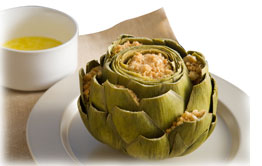
Tip #5: Use a large or jumbo
artichoke as a bowl for sauces and dips. Cook the artichoke,
then gently pry the leaves open, remove the inner choke, and place
the sauce or dip in the
center. |
Q
& A's
|
 Q: What is acidulated
water? Q: What is acidulated
water?
A: Many vegetables and
fruits will turn brown rapidly when their cut surfaces are exposed
to air in a process known as oxidation. The browning, or oxidation
may be reduced greatly by immersing the food in water that has been
amended with an acidic component such as lemon juice or vinegar. The
treated water is known as acidulated water.
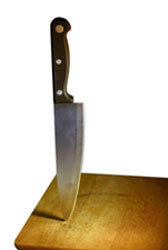 Q:
Which is more sanitary: wooden cutting boards or plastic cutting
boards? Q:
Which is more sanitary: wooden cutting boards or plastic cutting
boards?
A: There are
conflicting studies as to which material is actually more
sanitary. Wooden cutting boards have a natural antimicrobial
character, while plastic cutting boards are thought to be easier to
get clean. What is potentially dangerous with either material
are deep cuts or knife scars that capture dangerous bacteria and
contaminate otherwise safe foods. Evaluate your cutting boards often
and update as needed.
Q: What is an artichoke
plate?
A: An
artichoke plate is a specific dish slightly smaller than a dinner
plate. The plate has an indentation for cradling a whole, upright
artichoke, wells for dipping sauces, and locations for placing the
discarded leaves. Fashion your own artichoke service with a plate
accompanied by a dipping bowl. Place the dipping/sauce bowl on a
napkin or fabric coaster to prevent slipping and
sliding.
Q: What is the
best way to clean a cutting board?
A: To reduce cross
contamination of foods and potential food-borne illness, keep your
cutting boards clean. Use separate cutting boards for raw meat and
other foods. Clean cutting boards with hot, soapy water.
(Never submerge a wooden cutting board in water; it will soak up
water and then crack when drying). Occasionally sanitize cutting
boards with a solution of 1 teaspoon chlorine bleach in 1 quart of
water, or with full-strength white vinegar. Allow the solution
to set on the board for a few minutes, rinse, and allow to dry
completely before storing. Store cutting boards in a dry
location. Bacteria has a difficult time surviving without
moisture. |
Cookbook
Review
|
Chez Panisse
Vegetables by Alice Waters published by HarperCollins
Publishers, Inc., New York, NY. Copyright 1996.
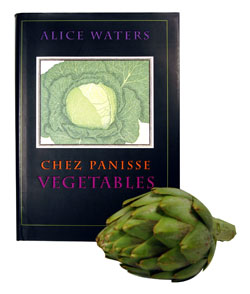 Chez Panisse
Vegetables is a great companion for approaching the growing
season ahead. From "A to Z" each vegetable is celebrated with a
comprehensive introduction, followed by recipes that showcase the
produce in its best light. Chez Panisse, for those unfamiliar with the
tradition, is a restaurant founded in 1971 in Berkeley, CA.
The philosophy of its founder and executive chef, Alice Waters, is
to create a food experience that allows diners to "partake of the
immediacy and excitement of vegetables just out of the garden, fruit
right off the branch and fish straight out of the sea." Chez
Panisse was an early proponent of sustainable agriculture and has
been the epicenter for the trend of fresh, locally-sourced food
prepared exquisitely. Chez Panisse has been the coveted
training ground for many of today's chefs and the source of pride
for those involved in creating and sustaining the tradition. Alice Waters is an icon in the
culinary world with numerous accomplishments and achievements to her
credit. Chez Panisse
Vegetables is one of those books that is equally at home on
the nightstand as in the kitchen. The color linocut images
that illustrate the book are beautiful works of art to be savored
along with the recipes. Chez Panisse
Vegetables is a great companion for approaching the growing
season ahead. From "A to Z" each vegetable is celebrated with a
comprehensive introduction, followed by recipes that showcase the
produce in its best light. Chez Panisse, for those unfamiliar with the
tradition, is a restaurant founded in 1971 in Berkeley, CA.
The philosophy of its founder and executive chef, Alice Waters, is
to create a food experience that allows diners to "partake of the
immediacy and excitement of vegetables just out of the garden, fruit
right off the branch and fish straight out of the sea." Chez
Panisse was an early proponent of sustainable agriculture and has
been the epicenter for the trend of fresh, locally-sourced food
prepared exquisitely. Chez Panisse has been the coveted
training ground for many of today's chefs and the source of pride
for those involved in creating and sustaining the tradition. Alice Waters is an icon in the
culinary world with numerous accomplishments and achievements to her
credit. Chez Panisse
Vegetables is one of those books that is equally at home on
the nightstand as in the kitchen. The color linocut images
that illustrate the book are beautiful works of art to be savored
along with the recipes. |
Artichoke
Recipes
|
Recipes excerpted from Chez Panisse
Vegetables by Alice Waters. Published by HarperCollins
Publishers, Inc. Copyright 1996. Reprinted with permission.
All rights reserved.
Artichoke and
Pink Grapefruit Salad
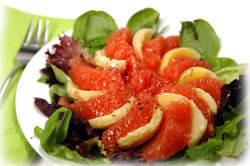 This
salad is the perfect side for the transition into spring. The
primary ingredients bridge the seasons with winter's pink grapefruit
and spring's artichoke bottoms. The bold pink of the fruit and
the subtle green of the artichoke interlaced on the plate make an
attractive visual presentation. The dressing is simple - your best,
most flavorful olive oil and fresh cracked pepper. The citrus
bursts in the mouth with each bite and blends with the artichokes'
unique flavor. Use the bottoms of freshly cooked artichokes, or in a
pinch, a can of artichoke bottoms. This
salad is the perfect side for the transition into spring. The
primary ingredients bridge the seasons with winter's pink grapefruit
and spring's artichoke bottoms. The bold pink of the fruit and
the subtle green of the artichoke interlaced on the plate make an
attractive visual presentation. The dressing is simple - your best,
most flavorful olive oil and fresh cracked pepper. The citrus
bursts in the mouth with each bite and blends with the artichokes'
unique flavor. Use the bottoms of freshly cooked artichokes, or in a
pinch, a can of artichoke bottoms.
Click here to view the
recipe.
Click here for a printable version of
the recipe (PDF format).
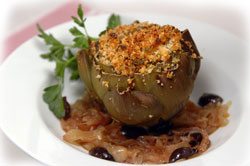 Artichokes
Baked with Anchovy Stuffing Artichokes
Baked with Anchovy Stuffing
A riff on classic Italian
stuffed artichokes, this version counts on the bed of onions and
olives to infuse their flavors into the artichoke and the
stuffing. The stuffing is a simple mix of bread crumbs, lemon,
parsley and a hint of anchovy. The tender artichokes are stunning
presentations on the dinner plate. Serve with wedges of lemon
and enjoy each leaf as you work toward the prize at the
center.
Click here to view the
recipe.
Click here for a printable version of
the recipe (PDF format).
Artichoke
Ragout with New Potatoes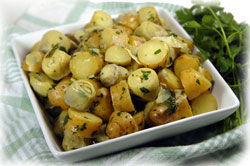
Another
celebration of spring, this combination of artichokes, new potatoes,
and spring onions is a new favorite of ours. Lightly sautéed onions
start the dish with artichoke hearts and cooked potatoes added in
succession. A smooth, natural sauce forms from the
vegetables. It's hearty, springtime fare worthy of casual
supper or a formal dinner.
Click here to view the
recipe.
Click here for a printable version of
the recipe (PDF
format).
| |


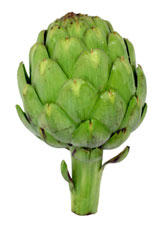 to
get a steak! Fortunately, it's not nearly that difficult.
Artichoke growers are reporting a "heavier than usual" harvest
this year due to favorable weather conditions. In this issue
we'll dissect an artichoke for you, demystify how to prepare
and eat fresh artichokes, and answer questions about tools
used in preparing artichokes and other spring vegetables. We
finish with three recipes that showcase artichokes in some
contemporary presentations.
to
get a steak! Fortunately, it's not nearly that difficult.
Artichoke growers are reporting a "heavier than usual" harvest
this year due to favorable weather conditions. In this issue
we'll dissect an artichoke for you, demystify how to prepare
and eat fresh artichokes, and answer questions about tools
used in preparing artichokes and other spring vegetables. We
finish with three recipes that showcase artichokes in some
contemporary presentations.